Joel Schumacher, the prolific and often polarizing American filmmaker, left an indelible mark on Hollywood over a four-decade career that saw him direct more than twenty feature films across a dizzying array of genres. Born in New York City on August 29, 1939, Schumacher’s path to the director’s chair was anything but conventional. Before ever stepping behind a camera, he carved out a successful career as a fashion designer, a background that would later inform the bold, visually striking aesthetic for which his films became known. His entry into the world of cinema began in the costume and production design departments, working on films like The Last of Sheila and Woody Allen’s Sleeper, before he honed his skills as a screenwriter, penning the scripts for the musical Sparkle and the 1978 remake of Car Wash.
Schumacher made his directorial debut in 1981 with the science fiction comedy The Incredible Shrinking Woman, but it was the mid-1980s that catapulted him to prominence as a defining voice of the Brat Pack era. He directed the 1985 coming-of-age drama St. Elmo's Fire, which starred a who’s who of young Hollywood including Emilio Estevez, Rob Lowe, and Demi Moore, and followed it two years later with the cult classic comedy horror The Lost Boys, starring Kiefer Sutherland and Jason Patric. These films established Schumacher as a director with a keen eye for youthful rebellion and a flair for stylish, pop-infused storytelling. Throughout the 1990s, he became one of the most commercially reliable directors in the industry, churning out a string of box office hits that included the science fiction horror Flatliners (1990), the romantic drama Dying Young (1991) with Julia Roberts, the acclaimed action drama Falling Down (1993) starring Michael Douglas, and the gritty crime thriller 8mm (1999) with Nicolas Cage. He also proved his mettle with literary adaptations, delivering successful films based on John Grisham novels with The Client (1994) and A Time to Kill (1996), the latter featuring a breakout performance from Matthew McConaughey.
In 1995, Schumacher was handed the keys to one of Hollywood’s most lucrative franchises, taking over the Batman series with Batman Forever. The film, starring Val Kilmer and Tommy Lee Jones, was a massive commercial success, grossing over $336 million worldwide. However, his 1997 follow-up, Batman & Robin, starring George Clooney and Arnold Schwarzenegger, became a critical and commercial disaster, widely regarded as one of the worst films ever made and a low point in the superhero genre. While Schumacher was unable to maintain the same consistent level of box office dominance in the years that followed, he still delivered several notable financial successes. The taut psychological thriller Phone Booth (2002), starring Colin Farrell, was a surprise hit, as was his ambitious 2004 adaptation of the Andrew Lloyd Webber musical The Phantom of the Opera and the 2007 Jim Carrey-led thriller The Number 23.
Schumacher’s final years in the industry saw him working on smaller-scale projects that received limited theatrical releases, including the 2011 crime thriller Trespass, starring Nicolas Cage and Nicole Kidman, which would be his last feature-length work. Though his later career never recaptured the heights of his 1990s heyday, his films have continued to be reassessed by audiences and critics alike. He passed away on June 22, 2020, at the age of 80, leaving behind a complex legacy as a filmmaker whose visually audacious style and genre-hopping ambition helped define an era of American cinema, and whose combined filmography grossed over $1 billion at the box office.
⭐
Similar Celebrities





📷
Recent Photos

Katie Price
Katie Price Launches Only Fans Channel - Photocall
Jan 26, 2022

Katie Price
Katie Price Launches Only Fans Channel - Photocall
Jan 26, 2022
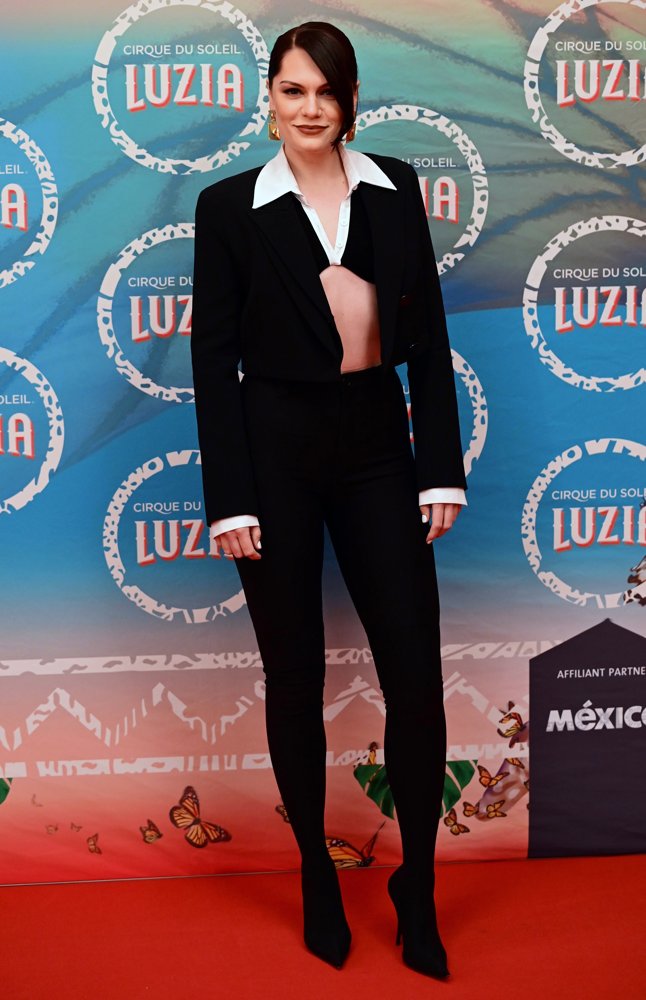
Jessie J
The Premiere of Cirque Du Soleil Luzia
Jan 13, 2022

Imogen Thomas
The Premiere of Cirque Du Soleil Luzia
Jan 13, 2022

Hayley Palmer
The Premiere of Cirque Du Soleil Luzia
Jan 13, 2022

Phoenix Chi Gulzar
The Premiere of Cirque Du Soleil Luzia
Jan 13, 2022




⭐Featured Celebrities