Hayao Miyazaki
Hayao Miyazaki, born on January 5, 1941, in Tokyo City, is a Japanese animator, filmmaker, and manga artist who has achieved international acclaim as a masterful storyteller and creator of Japanese animated feature films. Widely regarded as one of the most influential and accomplished filmmakers in the history of animation, he co-founded Studio Ghibli and serves as its honorary chairman, with his works frequently ranked among the greatest films of the 21st century. Miyazaki expressed interest in manga and animation from an early age and joined Toei Animation in 1963, working as an inbetween artist and key animator on films such as Gulliver's Travels Beyond the Moon (1965), The Great Adventure of Horus, Prince of the Sun (1968), and Animal Treasure Island (1971). He moved to A-Pro in 1971, where he co-directed Lupin the Third Part I (1971–1972) alongside Isao Takahata, beginning a long and fruitful collaboration. After moving to Zuiy? Eiz? (later Nippon Animation) in 1973, Miyazaki worked as an animator on World Masterpiece Theater and directed the television series Future Boy Conan (1978), before joining Tokyo Movie Shinsha in 1979 to direct his first feature film, The Castle of Cagliostro (1979), and the television series Sherlock Hound (1984–1985). He wrote and illustrated the manga Nausicaä of the Valley of the Wind (1982–1994) and directed the 1984 film adaptation produced by Topcraft, which set the stage for his next major endeavor.
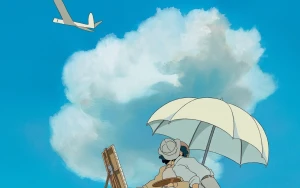
In 1985, Miyazaki co-founded Studio Ghibli, where he wrote and directed a series of critically and commercially successful films in Japan, including Laputa: Castle in the Sky (1986), My Neighbor Totoro (1988), Kiki's Delivery Service (1989), and Porco Rosso (1992). His film Princess Mononoke (1997) made history as the first animated film to win the Japan Academy Film Prize for Picture of the Year and briefly became the highest-grossing film in Japan, with its Western distribution significantly increasing Ghibli's worldwide popularity and influence. Miyazaki reached new heights with Spirited Away (2001), which became Japan's highest-grossing film and won the Academy Award for Best Animated Feature, frequently appearing on lists of the greatest films of the 21st century. He continued his remarkable run with Howl's Moving Castle (2004), Ponyo (2008), and The Wind Rises (2013), all of which enjoyed critical and commercial success. Although Miyazaki retired from feature films in 2013, he later returned to direct The Boy and the Heron (2023), which won the Academy Award for Best Animated Feature, cementing his legacy as a filmmaker of unparalleled vision.
Miyazaki's works are frequently subject to scholarly analysis and have been characterized by recurring themes such as humanity's relationship with nature and technology, the importance of art and craftsmanship, and the difficulty of maintaining a pacifist ethic in a violent world. His protagonists are often strong girls or young women, and several of his films present morally ambiguous antagonists with redeeming qualities. Throughout his career, Miyazaki has been highly praised and awarded; he was named a Person of Cultural Merit for outstanding cultural contributions in 2012, received the Academy Honorary Award for his impact on animation and cinema in 2014, and the Ramon Magsaysay Award in 2024. He has frequently been cited as an inspiration for numerous animators, directors, and writers, and his legacy continues to shape the world of animation and cinema globally.