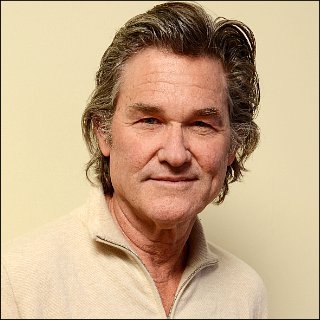
David Coverdale, born on September 22, 1951, in Saltburn-by-the-Sea, England, stands as one of the most recognizable and powerful voices in the history of hard rock. As the founder and enduring frontman of Whitesnake, he crafted a legacy defined by a potent blend of blues-soaked grit and arena-rock bombast. His career, spanning over five decades, has seen him rise from a local singer in the north of England to a global superstar, achieving multi-platinum success and earning a coveted place in the Rock and Roll Hall of Fame. Though he officially retired and disbanded Whitesnake in 2025, his influence on the genre remains immense.
Coverdale’s professional breakthrough came in 1973 when, after a series of local bands, he answered an advertisement in a British music paper and was chosen to replace Ian Gillan as the lead singer of the legendary hard rock act Deep Purple. Joining alongside fellow newcomer Glenn Hughes, Coverdale brought a new, more bluesy and sensual edge to the band's sound. During his tenure from 1973 to 1976, he contributed to the albums Burn, Stormbringer, and Come Taste the Band, co-writing much of the material and proving himself a formidable songwriter. His powerful and charismatic performances helped guide the band through a transitional period, and his time with Deep Purple established him as a formidable talent in the rock world.
Following the disbandment of Deep Purple in 1976, Coverdale took a brief hiatus to rest his voice before launching a solo career. His first two solo albums, White Snake and Northwinds, released in 1977, were critically well-received but commercially modest. This prompted him to build a full band around his solo material, and in 1978, he officially founded Whitesnake. The band quickly became a major force in the UK, Europe, and Asia, with a sound that fused heavy blues-rock with Coverdale’s distinctively gritty and sensual vocal delivery. Throughout the early 1980s, Whitesnake released a string of successful albums, including Ready an' Willing, Come an' Get It, and Slide It In, establishing a dedicated fanbase and becoming a staple of the hard rock scene.
The band's crowning commercial achievement came in 1987 with the release of the self-titled album Whitesnake. Driven by the massive hit singles "Here I Go Again" and "Is This Love," the album was a global phenomenon, selling millions of copies and achieving multi-platinum status in the United States. This success catapulted the band to the pinnacle of the 1980s rock scene, thanks in large part to a new lineup and a more polished, MTV-friendly sound. The album's success was further amplified by its iconic music videos, which became synonymous with the era's excess. Whitesnake’s popularity in North America during this period was immense, cementing their place as rock royalty.
After a hiatus from 1990 to 1993, Coverdale collaborated with Led Zeppelin guitarist Jimmy Page on the album Coverdale–Page. The project was a highly anticipated meeting of two rock heavyweights, and the album achieved platinum status, further demonstrating Coverdale's versatility and star power outside of his main band. He also released a third solo album, Into the Light, in 2000, showcasing his continued songwriting abilities. Coverdale later reformed and led several new incarnations of Whitesnake, continuing to tour and record well into the 21st century. In 2016, he received the ultimate recognition for his early work when he was inducted into the Rock and Roll Hall of Fame as a member of Deep Purple. After a final tour, Coverdale announced his retirement and disbanded Whitesnake in 2025, bringing a definitive close to a legendary career that indelibly shaped the sound of hard rock.
⭐
Similar Celebrities




📷
Recent Photos

Katie Price
Katie Price Launches Only Fans Channel - Photocall
Jan 26, 2022

Katie Price
Katie Price Launches Only Fans Channel - Photocall
Jan 26, 2022

Jessie J
The Premiere of Cirque Du Soleil Luzia
Jan 13, 2022

Imogen Thomas
The Premiere of Cirque Du Soleil Luzia
Jan 13, 2022

Hayley Palmer
The Premiere of Cirque Du Soleil Luzia
Jan 13, 2022

Phoenix Chi Gulzar
The Premiere of Cirque Du Soleil Luzia
Jan 13, 2022





⭐Featured Celebrities