Billie Holiday
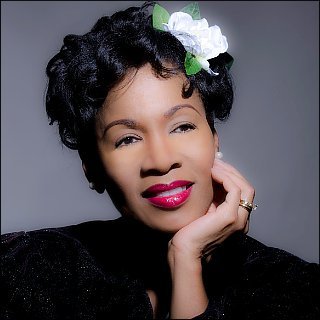
Billie Holiday, born Eleanora Fagan on April 7, 1915, in Philadelphia, Pennsylvania, remains an iconic figure in the world of jazz and swing music. Known affectionately as "Lady Day," a nickname given to her by the renowned saxophonist Lester Young, Holiday's unique vocal style and emotional delivery have left an indelible mark on music history. Her ability to manipulate phrasing and tempo, drawing inspiration from jazz instrumentalists, redefined the art of singing and influenced countless artists who followed.
Holiday's early life was tumultuous, marked by hardship and instability. Raised in a challenging environment, she moved to Harlem, New York, where her passion for music flourished. It was in the vibrant nightclubs of Harlem that she caught the attention of producer John Hammond, who recognized her extraordinary talent. In 1935, she signed a recording contract with Brunswick Records, and her collaboration with pianist Teddy Wilson resulted in the hit single "What a Little Moonlight Can Do," which subsequently became a jazz standard and is still celebrated today.
Throughout the late 1930s and into the 1940s, Holiday enjoyed significant mainstream success, recording with major labels such as Columbia and Decca. Her haunting renditions of songs like "Strange Fruit," which addressed the horrors of racism, showcased her ability to convey deep emotion through music. Despite her fame, Holiday's life was marred by personal struggles, including legal issues and battles with substance abuse. After serving a brief prison sentence, she made a triumphant return to the stage with a sold-out concert at Carnegie Hall.
The 1950s saw Holiday maintain her presence as a concert performer, with two further successful shows at Carnegie Hall. However, by this time, her voice had undergone changes due to her struggles, and her final recordings received mixed reactions. Despite this, she continued to release music, with her last album, "Lady in Satin," debuting in 1958.
Billie Holiday passed away on July 17, 1959, at the age of 44 from cirrhosis of the liver and heart failure. Her legacy has been honored posthumously with numerous accolades, including four Grammy Awards, all awarded after her death, and induction into the Grammy Hall of Fame and the National Rhythm & Blues Hall of Fame. In 2000, she was also recognized as an early influence in the Rock and Roll Hall of Fame, with the institution noting that "Billie Holiday changed jazz forever." Additionally, she was named one of NPR's 50 Great Voices and ranked fourth on Rolling Stone's list of the 200 Greatest Singers of All Time in 2023.
Her life has inspired numerous films, with the most recent being The United States vs. Billie Holiday, released in 2021. Billie Holiday's contribution to music continues to resonate, ensuring her place as one of the most celebrated and revered figures in the history of jazz.