Sir Alan William Parker, born on 14 February 1944 in Islington, London, and passing away on 31 July 2020, stands as one of the most versatile and influential British filmmakers of his generation. Rising from humble beginnings as a copywriter and director of television advertisements in his late teens, Parker spent roughly a decade crafting award-winning commercials before pivoting to feature films. Alongside contemporaries like Ridley Scott, Tony Scott, Adrian Lyne, and Hugh Hudson, he became a key member of the so-called "Adland Five"—a group of British directors who leveraged their advertising expertise into Hollywood success during the late 1970s and early 1980s, a path that would later inspire figures such as Christopher Nolan.
Parker's directorial debut, Bugsy Malone (1976), immediately showcased his audacious creativity, featuring an entirely child cast in a parody of 1920s gangster musicals. He followed this with the harrowing true-story drama Midnight Express (1978), which earned him widespread acclaim and marked the beginning of his reputation for tackling dark, emotionally charged subjects. The early 1980s saw him explore the performing arts with Fame (1980), a musical drama that became a cultural touchstone, and the surreal rock opera Pink Floyd – The Wall (1982), which demonstrated his mastery of visual storytelling. He continued to diversify with the family drama Shoot the Moon (1982) and the haunting war film Birdy (1984), the latter winning the Grand Prix Spécial du Jury prize at the 1985 Cannes Film Festival and earning a spot on the National Board of Review's Top Ten Films of 1984.
Throughout his career, Parker proved equally adept at navigating the realms of horror, thriller, and historical drama. Angel Heart (1987), a neo-noir horror starring Mickey Rourke, and Mississippi Burning (1988), a searing examination of civil rights-era racism, cemented his status as a fearless storyteller. He later helmed Come See the Paradise (1990), The Commitments (1991), a beloved musical comedy about a Dublin soul band, and Evita (1996), a lavish adaptation of the Andrew Lloyd Webber musical starring Madonna. His later works included the poignant Angela's Ashes (1999), based on Frank McCourt's memoir, and the political thriller The Life of David Gale (2003), starring Kevin Spacey. Parker's films collectively amassed nineteen BAFTA awards, ten Golden Globes, and six Academy Awards, underscoring his immense impact on both British and American cinema.
Beyond his directorial achievements, Parker was a tireless advocate for the film industry. He received the BAFTA for Outstanding British Contribution to Cinema in 1984, was knighted in 2002 for his services to the industry, and was a founding member of the Directors Guild of Great Britain. In 2000, he was honored with the Royal Photographic Society Lumière Award for major achievement in cinematography, video, or animation, and in 2013, he received the BAFTA Academy Fellowship, the highest honor the British Film Academy can bestow. Parker also dedicated himself to education, lecturing at various film schools, and in 2015, he donated his personal archive to the British Film Institute's National Archive. His legacy endures as a testament to the power of bold, genre-defying filmmaking and his pivotal role in bridging the worlds of advertising and cinema.
⭐
Similar Celebrities



📷
Recent Photos

A Band of Bitches
The Latin Grammys 2013
Nov 21, 2013
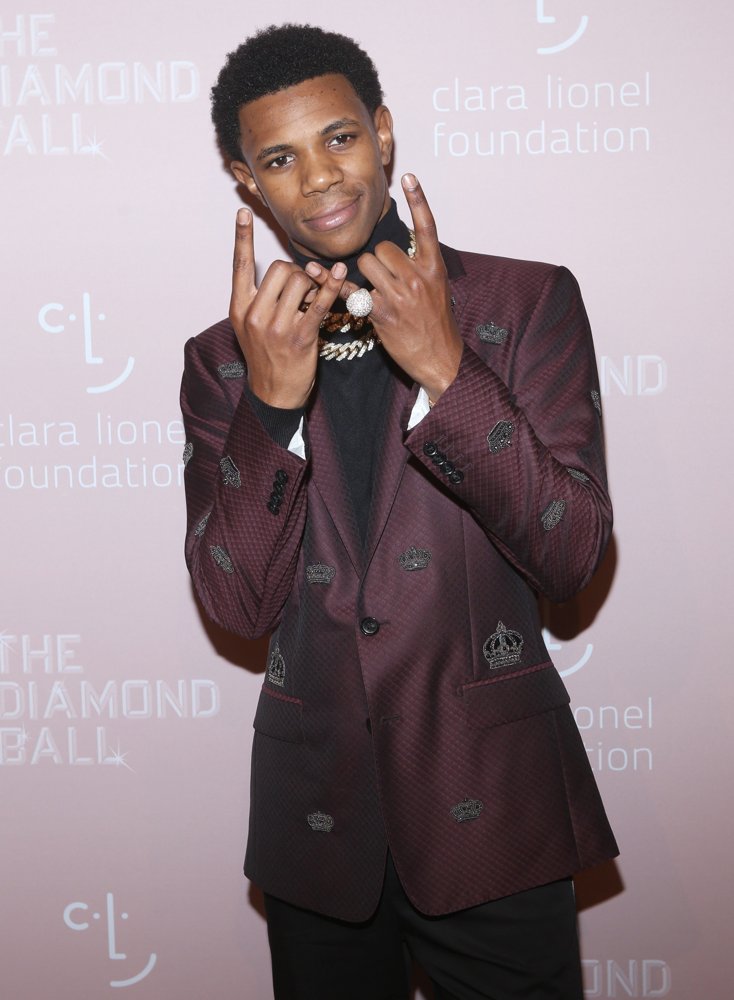
A Boogie Wit Da Hoodie
Rihanna's 4th Annual Diamond Ball
Sep 13, 2018

A Boogie Wit Da Hoodie
Lincoln Center Fashion Gala - An Evening Honoring Coach
Nov 29, 2018

A Boogie Wit Da Hoodie
STARZ Red Carpet Event for Power Final Season World Premiere
Aug 20, 2019

A Fine Frenzy
2012 Environmental Media Awards - Arrivals
Sep 29, 2012

A Fine Frenzy
2012 Environmental Media Awards - Arrivals
Sep 29, 2012





⭐Featured Celebrities