Laminate or luxury vinyl plank? We break down cost, water resistance, durability, and resale value so you pick the right floor the first time.
- October 27, 2026
AceShowbiz - You've ripped up the carpet, stared at the bare subfloor, and now you're standing in a big-box store aisle holding two sample planks that look almost identical. One says laminate. One says luxury vinyl plank. The price tags are close. The salesperson is no help. And you're quietly terrified of spending two grand on a floor that bubbles up the first time your kid knocks over a juice box.
Here's the thing most people don't realize: laminate and luxury vinyl plank (LVP) are built from completely different materials, and that difference shows up in exactly the moments that matter — a leaky dishwasher, a muddy dog, a humid summer. Picking the wrong one isn't a style mistake. It's a maintenance headache you'll live with for a decade.
This breakdown covers what actually separates them, where each one wins, and how to choose based on how you really live, not how the showroom makes you feel.
The Core Difference: Wood Fiber vs. Plastic
Laminate is essentially a pressed wood product. The core is high-density fiberboard — basically sawdust and resin glued and compressed into a rigid board. On top sits a printed photo layer that mimics wood or stone, sealed under a clear wear layer. It feels solid underfoot and clicks together like a puzzle.
Luxury vinyl plank is plastic through and through. The core is polyvinyl chloride (PVC), often with a limestone powder mixed in for stability. The image layer and wear layer sit on top, same as laminate. But because the whole thing is synthetic, it behaves completely differently around water.
That single material difference drives almost every other comparison — cost, water resistance, feel, resale perception. If you remember nothing else, remember this: laminate is wood-based, LVP is plastic-based. Everything downstream flows from there.
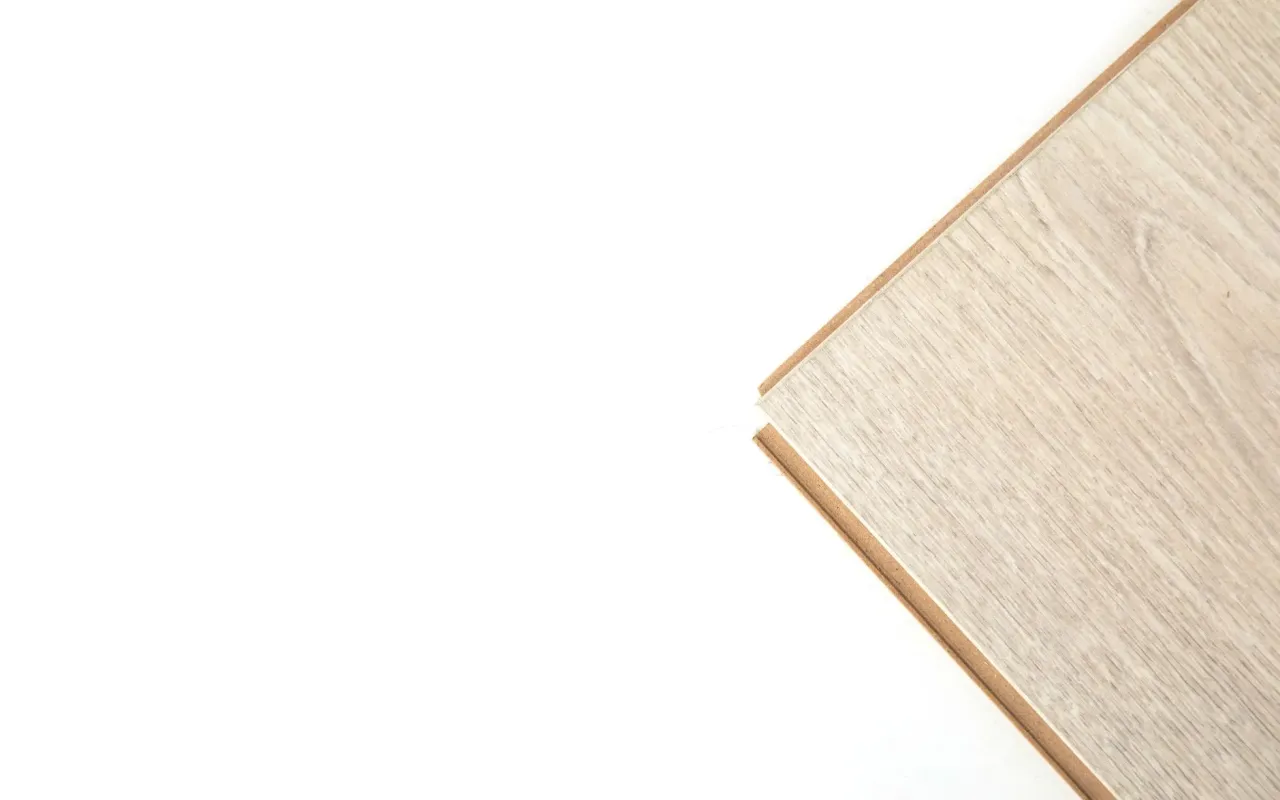
Practical tip: Ask to see a cut cross-section of both samples. You'll instantly see the fibrous, particle-like core of laminate versus the smooth, uniform core of vinyl. That visual is worth more than any spec sheet.
Water Resistance: Where LVP Runs Away With It
This is the category that decides it for most households. Standard laminate swells when water gets into the seams and sits. Not "gets a little wavy" swells — the edges puff up, the joints lift, and there's no fixing it. You replace boards.
To be fair, laminate makers have responded. Water-resistant and even waterproof laminate now exists, with sealed cores and tight joint systems. It handles spills and damp mopping fine. But "waterproof laminate" is a marketing claim built on treated edges, and it still doesn't love standing water the way vinyl does.
LVP is genuinely waterproof. The planks themselves won't absorb water, so a spilled bucket, a leaking fridge line, or a basement that gets damp won't destroy the floor. That's why LVP has become the default choice for kitchens, bathrooms, laundry rooms, and basements.
Practical tip: If the room has a floor drain, a water heater, or a washing machine, go LVP. If it's a dry bedroom or hallway and you love the laminate price, laminate is a reasonable call — just wipe spills promptly.
Durability, Dents, and the Dog Test
Both floors hold up well in normal traffic. Where they diverge is in how they fail. Laminate has a hard, rigid surface with a strong wear layer, so it resists scratches from claws and dropped keys impressively. But that hardness cuts both ways — drop a cast-iron pan and you can chip the surface, and the chip is permanent.
LVP is slightly softer and has some give. It bounces back from impacts better and won't chip the way laminate can. On the flip side, heavy furniture legs left in one spot for years can leave dents in vinyl, especially in cheaper, thinner planks. Rigid-core LVP with a thicker wear layer (look for 20 mil or higher in busy homes) holds up much better.
Real-world scenario: a 70-pound labrador sliding around a corner. Laminate's hard surface shows claw scratches over time but survives. LVP takes the scratches slightly better but can scuff from grit dragged across it. Either way, felt pads under furniture and a doormat at every entry do more for longevity than the material choice.
Practical tip: In homes with big dogs or kids, prioritize wear layer thickness over brand name. A 20-mil LVP or an AC4-rated laminate will outlast a bargain option every time.
Cost, Installation, and What You'll Actually Pay
On materials, laminate usually comes in a bit cheaper — often $1.50 to $4 per square foot, versus roughly $2.50 to $7 for LVP. Higher-end waterproof laminate and premium rigid-core vinyl overlap in price, so the gap narrows as you climb.
Installation is where budgets shift. Both are floating floors that click together over most existing hard surfaces, which keeps labor down. Laminate needs a flat subfloor and an expansion gap, and it can't go below grade in damp basements. LVP is more forgiving and works over concrete, in basements, and in bathrooms.
Don't forget the hidden costs. Laminate often needs an underlayment for sound and moisture. LVP frequently comes with attached underlayment, saving a step. And if you're doing it yourself, both are genuinely DIY-friendly — a weekend project for a handy homeowner with a few basic tools.
Practical tip: Get the all-in number — planks, underlayment, trim, and any subfloor prep — before comparing. The "cheaper" option isn't cheaper if it needs a separate underlayment you didn't budget for.
Comfort, Sound, and Resale Value
Walk on both barefoot and you'll notice laminate feels firmer and a touch colder, closer to real hardwood. LVP has a slightly softer, warmer feel, especially with attached padding. Sound matters too: laminate tends to be louder and clickier underfoot, while vinyl absorbs a bit more of that hollow echo.
Resale is the quiet factor. Buyers recognize hardwood and often assume vinyl is "cheap plastic," even when it's a premium product. Laminate reads as a budget wood-look option. Neither adds real value the way hardwood does, but a well-installed LVP in a kitchen or bath can help a house feel updated and low-maintenance — a genuine selling point for busy buyers.
If you're flipping or selling within a few years, LVP in wet areas is the safer bet. If you're staying put and want a warm, solid feel in dry rooms, laminate delivers a lot for the money.
Practical tip: Order one extra box of whichever you choose and stash it in the garage. Matching dye lots later is a nightmare, and a spare box saves you if a plank gets damaged.
How to Decide in Five Minutes
Run through your rooms honestly. Bathrooms, kitchens, laundry rooms, basements, and any home with pets or young kids lean LVP — the waterproof core is worth the premium. Dry bedrooms, hallways, and living rooms where budget matters lean laminate, provided you're okay wiping up spills.
Consider your climate too. Humid regions and homes with big seasonal swings are kinder to vinyl, which won't swell. Very dry climates are more forgiving of laminate. And think about your tolerance for imperfection: laminate chips, vinyl dents. Neither is indestructible.
Whichever you pick, buy a mid-to-upper tier product with a solid wear layer, install it over a properly prepped subfloor, and use felt pads and mats. The best floor isn't the most expensive one — it's the one matched to how your house actually gets lived in.
Practical tip: Bring home full-size samples of both, leave them on the floor for a week, and walk on them barefoot in different light. The floor you thought you wanted in the store often loses to the one that feels right at 7 a.m. in socks.