Your wok is probably not hot enough. Here's how to season it, heat it, and stir-fry like a restaurant line cook in your own kitchen.
- October 24, 2026
AceShowbiz - Most home cooks own a wok. Far fewer actually stir-fry in one. The pan sits in the cabinet because the first few attempts came out limp, watery, or stuck to the bottom in a crust that took twenty minutes to scrub. That's not a sign you're bad at cooking. It's a sign the wok was never set up or heated correctly.
Here's the part nobody tells you: a wok is not just a big frying pan. It's a different cooking system. The curved walls, the thin carbon steel, the way heat concentrates at the bottom and tapers up the sides — all of it is designed for one thing, and it only works if you follow a few rules. Get those right and a weeknight stir-fry becomes faster than delivery and genuinely better than what you'd get from most takeout spots.
Start With the Right Pan (and Yes, It Matters)
If your wok is nonstick, coated in something slick and gray, you're fighting an uphill battle. Nonstick woks can't handle the heat stir-frying requires — most manufacturers cap them around 400°F, and a proper stir-fry wants the pan pushing past 600°F at the center. Push a nonstick pan that hot and you're degrading the coating and possibly releasing fumes you don't want in your kitchen.
What you want is carbon steel. It's cheap (a decent 14-inch flat-bottom wok runs $30–$50), light enough to toss food with one hand, and it takes on a patina that makes it naturally nonstick over time. Cast iron woks exist and hold heat well, but they're heavy and slow to respond — not ideal when you need to adjust temperature on the fly. If you already own a carbon steel wok and it's rusty or sticky, don't toss it. It can almost certainly be rescued.
Flat bottom vs. round bottom
Round-bottom woks are traditional and give you better heat distribution, but they need a wok ring to sit stably on a Western gas or electric stove. Flat-bottom woks sit directly on the burner and are the practical choice for most US kitchens. The flat spot is small enough that you still get the curved-wall effect where food can be pushed up and away from the heat.
Practical takeaway: Before your next stir-fry, check your pan. If it's nonstick, buy a carbon steel wok. If it's carbon steel, check for rust — a quick scrub with steel wool and a re-seasoning session will bring it back.
Season It Once, Then Barely Think About It Again
A new carbon steel wok comes coated in a factory oil that's there to prevent rust, not to cook on. Scrub it off with hot water, dish soap, and steel wool until the metal feels uniformly rough and bare. Dry it immediately and thoroughly — carbon steel rusts fast, sometimes within minutes of sitting wet.
To season, set the wok over high heat until it starts to smoke slightly, then swirl in a tablespoon of neutral oil (grapeseed, canola, or peanut) and wipe it around the entire interior with a paper towel held with tongs. The metal will darken. Repeat this two or three times, letting the wok cool slightly between coats. You're building a thin, hard layer of polymerized oil — the same chemistry as a cast iron skillet's seasoning.
Keeping the seasoning alive
After each use, rinse the wok with hot water and a soft brush — skip soap, which can strip a young seasoning. Dry it on the burner over low heat for a minute, then wipe a few drops of oil across the surface while it's still warm. That thirty-second ritual is the whole maintenance routine.
Your seasoning will get blotchy and uneven at first. That's normal. Keep cooking with it and it evens out. A wok that's been used daily for a year looks almost black and glossy, and food slides around in it like it's coated in glass.
The Heat Rule That Changes Everything
Here's the single biggest reason home stir-fries turn out soggy: the pan isn't hot enough. When you add cold or room-temperature food to a lukewarm wok, the food releases moisture faster than the pan can evaporate it. You end up steaming your vegetables in their own liquid instead of searing them. The result is that pale, limp, slightly sad pile of vegetables.
Preheat the wok over high heat for two to three minutes before anything goes in. You want it hot enough that a drop of water flicked in sizzles and evaporates instantly, or a wisp of smoke rises from the surface. On a standard home gas burner, this takes longer than you'd expect. On electric coil or glass-top stoves, it takes longer still — and this is where most people give up.
Working with a weak burner
Restaurant woks run on 100,000-BTU jet burners. Your home stove puts out maybe 10,000 to 18,000 BTUs. You can't replicate that, but you can compensate. Cook in smaller batches — never more than can sit in a single layer in the bottom third of the wok. Let the pan reheat for 30 seconds between batches. And consider preheating the wok in a 500°F oven for ten minutes before moving it to the stovetop, which gives you a serious head start.
Practical takeaway: If your stir-fry steams instead of sears, your pan was too cold or too crowded. Fix those two variables before changing anything else.
Prep Everything Before the Pan Gets Hot
Stir-frying happens in minutes, sometimes seconds. There is no time to chop garlic while the ginger burns. This is why professional kitchens call it mise en place — everything in its place before cooking starts. Home cooks who skip this step end up with burnt aromatics and raw protein in the same dish.
Set out small bowls with your sliced protein, your cut vegetables grouped by cooking time, your aromatics (garlic, ginger, scallion whites), your sauce mixture, and your finishing elements (scallion greens, sesame oil, herbs). Line them up next to the stove in the order they'll go in. This takes ten minutes and saves the entire dish.
Cut for speed, not for looks
Size and shape matter more than knife skills here. Cut everything into pieces of similar thickness so they cook at the same rate. Slice meat against the grain into thin strips — a partially frozen piece of chicken or beef is much easier to slice thin. Vegetables like carrots and broccoli should be cut smaller than you think; they need to cook through in the time it takes to sear, not steam.
Dense vegetables — broccoli, cauliflower, carrots — benefit from a quick blanch in boiling water for 60 to 90 seconds before stir-frying. This par-cooks them so they finish in the wok without requiring extra time that would overcook everything else.
The Actual Cooking Sequence
Once the wok is screaming hot, add a high-smoke-point oil — peanut, avocado, grapeseed, or canola. Not olive oil, and definitely not butter, which will burn and turn bitter. Swirl it around the bottom and up the sides. It should shimmer immediately.
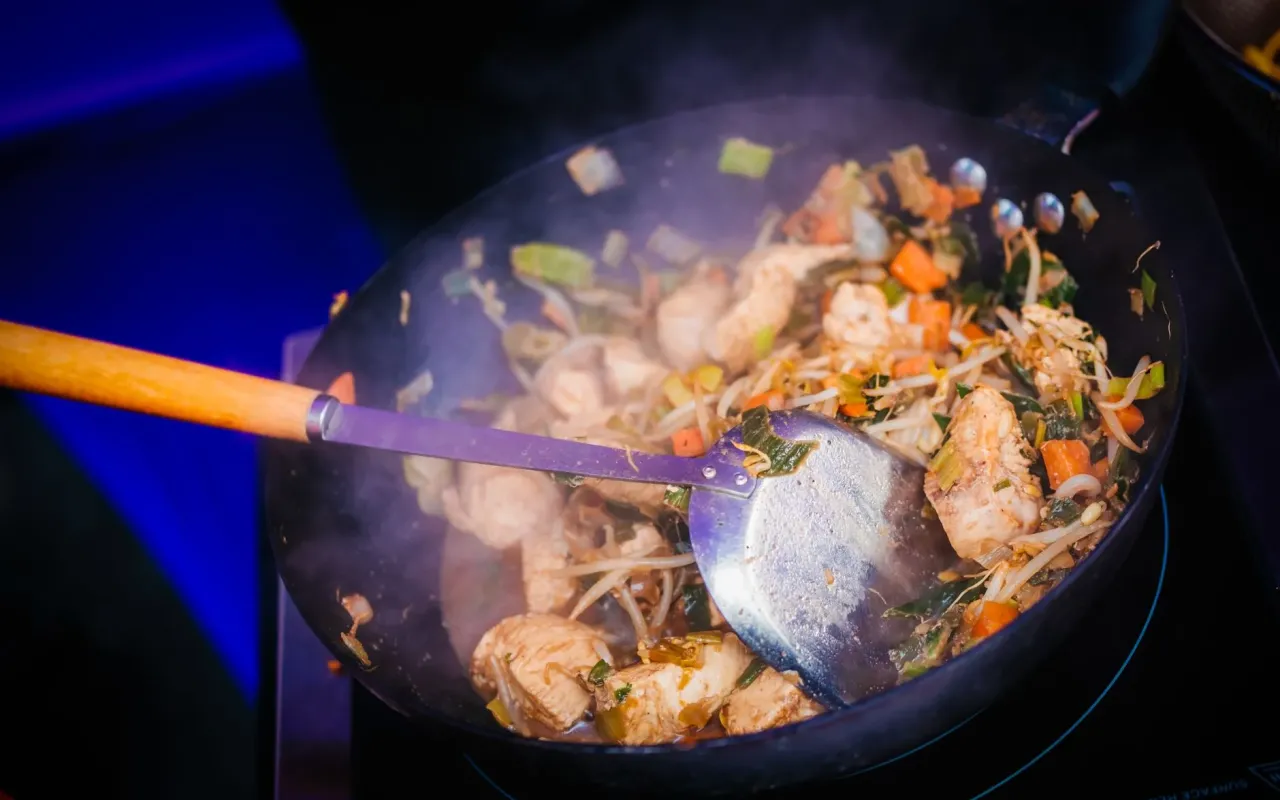
Add your protein first, spread it in a single layer, and leave it alone for 30 to 45 seconds before stirring. That contact time is what creates browning. Then push it up the sides of the wok, where the heat is gentler, and add your aromatics to the oil at the bottom. Ten to fifteen seconds for garlic and ginger — just until fragrant, not browned. Then add vegetables, tossing constantly.
The sauce goes in last
Mix your sauce in a bowl beforehand: soy sauce, a little cornstarch slurry, stock, sugar, rice vinegar, whatever your recipe calls for. Add it at the very end, toss for 30 seconds until it coats everything and thickens, and get the food out of the pan. Sauce left sitting in a hot wok will reduce and burn.
If your sauce isn't thickening, the cornstarch ratio is off — about one teaspoon of cornstarch per tablespoon of liquid is a good starting point. If your dish tastes flat, it usually needs acid (a splash of vinegar or lime) or salt, not more soy sauce.
Practical takeaway: Write your cooking order on a sticky note and put it on the backsplash the first few times. Protein, aromatics, vegetables, sauce, finish. It becomes automatic fast.
Clean It Right and It Lasts Decades
A well-cared-for carbon steel wok is a lifetime purchase. Many families pass them down. The cleaning routine is short but specific: hot water, a soft brush or bamboo wok scrubber, no dishwasher, no soaking. If something sticks, simmer a little water in the wok for a minute to loosen it rather than scraping hard.
Dry it on the burner, oil it lightly, hang it or store it somewhere dry. If rust appears, scrub it off with steel wool, re-season that spot, and move on — it's not ruined. The pan is forgiving in a way nonstick never is.
Once you've cooked a dozen stir-fries in a properly heated carbon steel wok, the whole process compresses. You stop measuring and start tasting. The pan becomes an extension of your hand, and dinner becomes a fifteen-minute affair instead of a project. That's the real payoff — not restaurant mimicry, but a fast, reliable, genuinely good way to cook vegetables and protein on a Tuesday night.