Tired of barking dogs and lawnmowers ruining your calls? Here's how to soundproof a home office room with practical, budget-friendly fixes.
- October 14, 2026
AceShowbiz - You're mid-sentence on a client call when your neighbor fires up a leaf blower, your dog launches into a full-scale alert, and somewhere in the house a door slams hard enough to rattle your webcam. If this sounds familiar, you're not alone. A 2026 survey of remote workers found that nearly 60% said background noise was their single biggest frustration with working from home — ahead of slow internet and even loneliness.
Here's the good news: you don't need to gut your walls or spend five figures on a professional studio build. Soundproofing a home office is really two separate problems — blocking sound that's trying to get in, and absorbing sound that's bouncing around inside. Once you understand the difference, you can attack the worst offenders first and get 80% of the benefit for maybe 20% of the cost.
This guide walks through what actually works, what's a waste of money, and how to sequence your fixes so you feel the difference on your very next Zoom call.
Understand the Two Problems Before You Buy Anything
People throw around the word "soundproofing" for two very different goals, and mixing them up is why so many home office upgrades flop. The first goal is sound isolation — stopping noise from traveling through walls, doors, floors, and windows. The second is sound absorption — reducing echo and reverb inside the room so your voice sounds clean on calls and the space feels calmer.
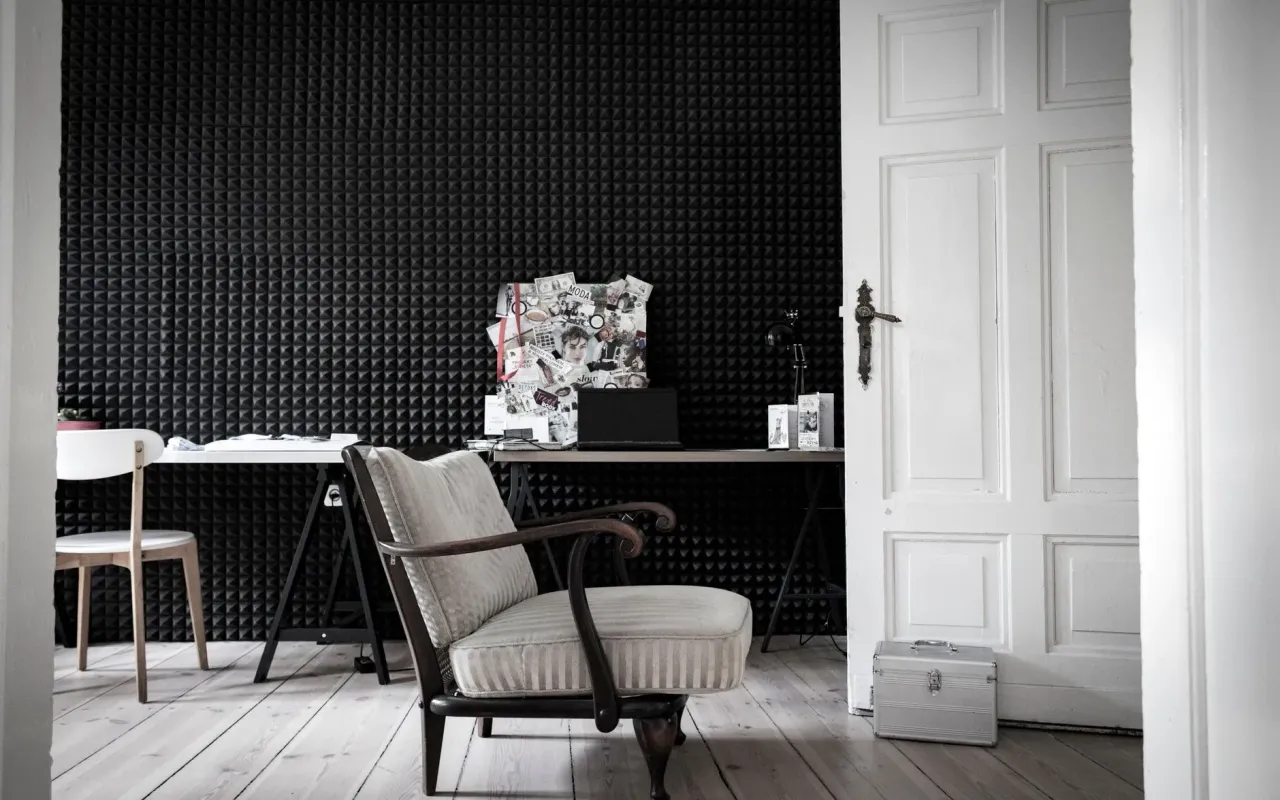
They use different materials and solve different complaints. Acoustic foam panels, the kind you see plastered on YouTuber walls, do almost nothing to stop your neighbor's lawnmower from getting in. They only kill the echo bouncing off your drywall. Conversely, a heavy mass-loaded vinyl barrier won't make your voice sound less hollow — it just blocks air-transmitted noise.
So before you spend a dime, identify your actual pain point. Is it noise coming in (dogs, traffic, roommates, a shared wall)? Is it noise leaking out (your calls bothering your partner or sleeping kids)? Or is it that your own recordings sound tinny and echoey? Most home offices have a mix, but one usually dominates.
Practical tip: Spend 24 hours noting every noise complaint and its source. Write down the time and what you heard. That log will tell you exactly where to aim your budget instead of guessing.
The Cheapest Wins Come From Sealing Gaps, Not Adding Mass
Here's the counterintuitive truth about sound: it's lazy. It will always take the easiest path, and that path is almost never through a solid wall — it's through the cracks. A typical interior door has a half-inch gap at the bottom, gaps around the frame, and a hollow core. That single door can leak more sound than an entire wall.
Think of sound like water. If you had a leaky basement, you'd caulk the cracks before you waterproofed the whole foundation. Same logic applies here. Sealing air gaps is the highest-return, lowest-cost move in the entire playbook, and most people skip it because it's not as satisfying as hanging panels.
Start with these fixes, roughly in order of impact:
- Door sweep or draft stopper: A simple rubber or brush sweep on the bottom of your office door can cut transmitted noise noticeably. Cost: $10–$25.
- Weatherstripping around the door frame: Adhesive foam or rubber gasket tape closes the perimeter gaps. Cost: $8–$15.
- Acoustic caulk around outlets and baseboards: Sound sneaks through electrical boxes and tiny wall seams. Pull the cover plates and seal behind them. Cost: $10 for a tube.
- Door swap (later): If your office door is hollow-core, replacing it with a solid-core or solid wood door is one of the single best upgrades you can make.
Do this first. You'll likely be surprised how much quieter things get before you've bought a single acoustic panel.
Windows and Walls: Where the Real Noise Gets In
If you've sealed your door and noise is still pouring in, the culprit is almost always a window or a shared wall. Windows are the weakest link in most homes because glass is thin and frames leak air. If your office faces a street or a neighbor's yard, this is your battleground.
For windows, the layered approach works best. A heavy acoustic curtain or a quilted window panel adds mass and absorbs some of the incoming sound. For a bigger jump, consider a window insert — a clear acrylic panel that seals over your existing window with a small air gap between them. That trapped air gap is what does the heavy lifting, and it's the same principle behind double-pane glass. You keep your view and your light while cutting a meaningful chunk of outside noise.
For walls, especially shared walls in apartments or townhomes, adding mass is the goal. You have a few realistic options. Hanging a heavy, dense material like mass-loaded vinyl behind drywall isn't a weekend project, but adding a second layer of drywall with a damping compound between the layers genuinely works. A less invasive route is building a simple frame and filling it with dense mineral wool, then covering it with fabric — this doubles as a decorative headboard or wall feature.
Practical tip: Before you invest in wall treatments, stand in your office and listen with the door closed. Cup your hands over your ears and note which direction the noise comes from. That directional clue tells you whether to spend on the window, the wall, or the door — and stops you from wasting money on the wrong surface.
Absorb the Echo So You Sound Professional on Calls
Now let's flip to the other problem. Even in a perfectly quiet room, a bare space with hard floors, big windows, and empty walls creates echo. That echo makes you sound like you're calling from a bathroom, and it's the number one reason home recordings sound amateur. The fix is absorption, and it's cheap and satisfying.
Soft, porous materials soak up sound energy instead of reflecting it. Rugs, upholstered furniture, bookshelves full of books, and curtains all pull double duty as acoustic treatment. A thick area rug over a hard floor is a dramatic improvement, and you probably already want one. Bookshelves are secretly excellent diffusers — irregular surfaces scatter sound rather than bouncing it straight back.
Commercial acoustic panels do work, but you don't need to cover every wall. The key spots are the first reflection points: the wall directly in front of you, the wall behind your microphone, and the ceiling above your desk if it's low. Hanging two or three panels at those points often beats covering an entire wall. If you want a budget version, dense moving blankets or thick quilts hung on the wall absorb sound surprisingly well, though they look less polished.
Practical tip: Record a 30-second voice memo before and after adding a rug and a bookshelf. The difference in how "close" and clean your voice sounds will convince you faster than any spec sheet. And remember — every soft surface you add also makes the room feel warmer and more pleasant to sit in, which matters when you're in there eight hours a day.
A Realistic Budget and Order of Operations
Let's put it all together with numbers, because the internet is full of advice that ignores what things actually cost. You can make a serious dent in a home office noise problem for under $150, and a dramatic transformation for a few hundred more. The trick is sequencing — cheap fixes first, expensive structural work only if you still need it.
Here's a sensible order to follow:
- Tier 1 (under $50): Door sweep, weatherstripping, acoustic caulk around outlets, and a thick rug. This alone solves many people's problems.
- Tier 2 ($50–$250): Acoustic curtains for the window, two or three absorption panels at reflection points, and a bookshelf. This handles most echo and a good chunk of outside noise.
- Tier 3 ($250+): Window insert, solid-core door replacement, or a second drywall layer with damping compound on a shared wall. Only go here if Tiers 1 and 2 left you wanting more.
One warning: skip the gimmicks. Cheap foam "soundproofing" tiles marketed as noise blockers are mostly decoration. Egg cartons do essentially nothing despite the persistent myth. And "soundproof paint" is a marketing fantasy — paint has no meaningful mass. Spend your money on mass, sealing, and absorption instead.
Finally, be honest about diminishing returns. If you live next to a highway or under a flight path, no amount of residential treatment will create absolute silence. The realistic goal is to reduce noise enough that it stops disrupting your focus and your calls — not to build a professional recording booth. Most people hit that goal with Tier 1 and Tier 2 fixes and never need to touch the walls. Start small, measure the difference, and only escalate if the noise still wins.