Tired of weekend yard work? Learn how to design a low maintenance front yard with smart plants, hardscaping, and irrigation tips that save time and water.
- September 27, 2026
AceShowbiz - You pull into your driveway after a long week, and instead of feeling relief, you feel a familiar dread. The front lawn is patchy, the hedges are shaggy, and that one flower bed has turned into a weed farm. If you're spending four or more hours every weekend just keeping your front yard from looking neglected, something is broken — and it's not you.
Here's the good news: a front yard can look intentional, welcoming, and even upscale while demanding almost nothing from you. The trick isn't doing less landscaping. It's designing the yard so that maintenance becomes almost unnecessary. That means choosing the right plants, the right ground surfaces, and the right irrigation setup from the start.
This guide walks you through exactly how to make that happen, with real numbers and specific plant and material recommendations you can take to a nursery or contractor this weekend.
Start With the Real Cost of a Traditional Lawn
Before you rip anything out, it helps to understand what you're actually paying for that green carpet. The average American spends about 70 hours a year on lawn and garden care, according to the U.S. Bureau of Labor Statistics' American Time Use Survey. That's nearly two full work weeks of your life, every single year, spent mowing, edging, trimming, and hauling bags of clippings.
The money adds up too. A typical quarter-acre lawn costs somewhere between $500 and $1,200 annually in water, fertilizer, fuel, and equipment maintenance. Add a lawn service at $50 to $80 per visit during growing season, and you're looking at $1,500 to $2,500 a year for a patch of grass you barely use.
And here's the part most people don't think about: that grass isn't even doing much for your home's curb appeal. Turf is the default, not the upgrade. When buyers and neighbors see a thoughtfully designed low-water yard with clean lines and healthy plants, it reads as modern and cared-for, not neglected.
Practical takeaway: Measure your actual lawn area this week. Multiply the square footage by $0.50 to $1.00 per square foot per year for upkeep. Seeing that number written down makes the decision to redesign much easier.
Pick Plants That Thrive on Neglect
The single biggest mistake in low-maintenance landscaping is choosing plants that need constant attention: annuals you have to replant every spring, roses that demand spraying, or fast-growing shrubs that need trimming four times a year. The fix is to build your plant palette around three traits: drought tolerance, slow growth, and evergreen structure.
Go Native and Regionally Adapted
Native plants evolved in your climate, which means they handle your local rainfall, soil, and temperature swings without coddling. Once established — usually after one full growing season — most natives need no supplemental water at all. In the Midwest, that might mean coneflowers, little bluestem grass, and switchgrass. In the Southwest, agave, desert marigold, and red yucca. In the Southeast, yaupon holly, beautyberry, and muhly grass.
Beyond the water savings, natives attract pollinators and birds, which makes your yard feel alive without you lifting a finger. A yard full of butterflies is a lot more interesting than a yard full of grass blades.
Choose Slow-Growing Evergreens for Structure
You still need bones — the plants that give your yard shape in winter. Skip fast-growing shrubs like privet or photinia, which can put on three feet a year and demand constant pruning. Instead, look at dwarf varieties of boxwood, Japanese holly, inkberry, or dwarf yaupon. These grow only two to four inches per year and hold a clean shape with a single annual trim.
For taller accents, consider dwarf conifers like 'Blue Star' juniper or 'Carstens' wintercreeper. They stay compact for a decade or more, which means you plant them once and basically forget them.
Practical takeaway: Ask your local extension office or a native plant nursery for a list of "no-irrigation-after-establishment" species for your zip code. That phrase is the gold standard for low-maintenance planting.
Replace Grass With Hardscape and Groundcover
Every square foot of lawn you remove is a square foot you never mow again. The goal isn't to pave your entire front yard — that looks sterile and creates drainage problems — but to shrink the lawn to a manageable shape and fill the rest with surfaces that stay put.
Hardscape That Earns Its Keep
A gravel or decomposed granite path costs $2 to $5 per square foot installed and lasts decades with occasional raking. A flagstone patio runs $15 to $30 per square foot but adds real usable space and resale value. Both eliminate mowing, watering, and fertilizing in those areas permanently.
Mulch is the cheapest option at roughly $1 to $2 per square foot, but it needs refreshing every year or two. If you want zero annual work, choose inorganic mulch like river rock or crushed granite instead. It costs more upfront but never breaks down, never needs replacing, and never harbors weeds the way bark mulch can.
Groundcovers That Fill Space Without Fighting You
Where you want green but not grass, use spreading groundcovers. Creeping thyme, creeping juniper, and sedum all form dense mats that crowd out weeds and need no mowing. They're also drought-tolerant once established. Plant them on 12- to 18-inch centers and they'll knit together within two seasons.
One caution: avoid aggressive spreaders like English ivy or vinca minor unless you truly want them everywhere. They're low-maintenance in the sense that they need no care, but they can escape into neighboring beds and become a headache. Stick with clumping or slow-spreading varieties.
Practical takeaway: Aim to cut your lawn area by at least 50 percent. Draw your current yard on graph paper, shade the lawn, then redraw it with a smaller, simpler shape — ideally with curved edges that are easy to mow around.
Design an Irrigation System You Barely Think About
Watering is the chore that sneaks up on you. You forget for a week, plants stress, and suddenly you're hand-watering every evening. The solution is to automate it correctly from day one, then let it run.
Drip Irrigation Beats Sprinklers
Drip lines deliver water directly to plant roots and lose almost nothing to evaporation. A drip system costs roughly $0.50 to $1.00 per square foot to install and cuts water use by 30 to 50 percent compared to overhead sprinklers. More importantly, it can run on a simple battery timer you set once and check twice a year.
If you're planting natives, you may not need irrigation at all after the first year. But a temporary drip setup for establishment is worth the modest cost — it's the difference between plants that survive and plants that thrive.
Hydrozoning Keeps Things Simple
Group plants by water need, not by how they look together. Put your thirstiest plants in one zone with its own drip line, and your drought-tolerant plants in another with no irrigation at all. This is called hydrozoning, and it prevents the classic mistake of overwatering desert plants while underwatering the ones that need moisture.
Add two to three inches of mulch around everything. It reduces evaporation by up to 70 percent, keeps soil temperatures stable, and suppresses weeds. It's the single cheapest thing you can do to reduce maintenance.
Practical takeaway: Install a smart timer that adjusts for rainfall, or simply set your drip system to run deeply twice a week instead of lightly every day. Deep, infrequent watering builds stronger roots and healthier plants.
Keep Maintenance Low With Smart Layout and Edging
Even the best plant choices can create work if the layout fights you. Sharp corners, narrow strips of grass, and unmulched beds all invite extra trimming. A few design moves eliminate most of that labor.
Design Out the Annoying Edges
Narrow strips of grass between a sidewalk and a fence are miserable to mow and edge. Replace them with groundcover or gravel. Wide, sweeping curves are easier to mow than tight zigzags. And a physical edging — steel, aluminum, or concrete — keeps grass from creeping into beds, which saves you hours of weeding and trimming each year.
Let Plants Grow Into Their Space
Overplanting is a common mistake. When shrubs are crowded, they need constant pruning to stay in bounds. Space them according to their mature size, even if the bed looks sparse for the first two years. You'll save yourself years of trimming, and the plants will be healthier because they have room to breathe.
Also, resist the urge to plant annuals every spring. They're colorful but they're the definition of high maintenance. If you want seasonal color, use a few large containers near the entry that you can swap out in an afternoon — not dozens of small plantings scattered across the yard.
Practical takeaway: Walk your yard and identify every spot that requires a string trimmer or hand edger. Those are your problem areas. Convert each one to hardscape, groundcover, or a wider bed until the trimmer stays in the garage.
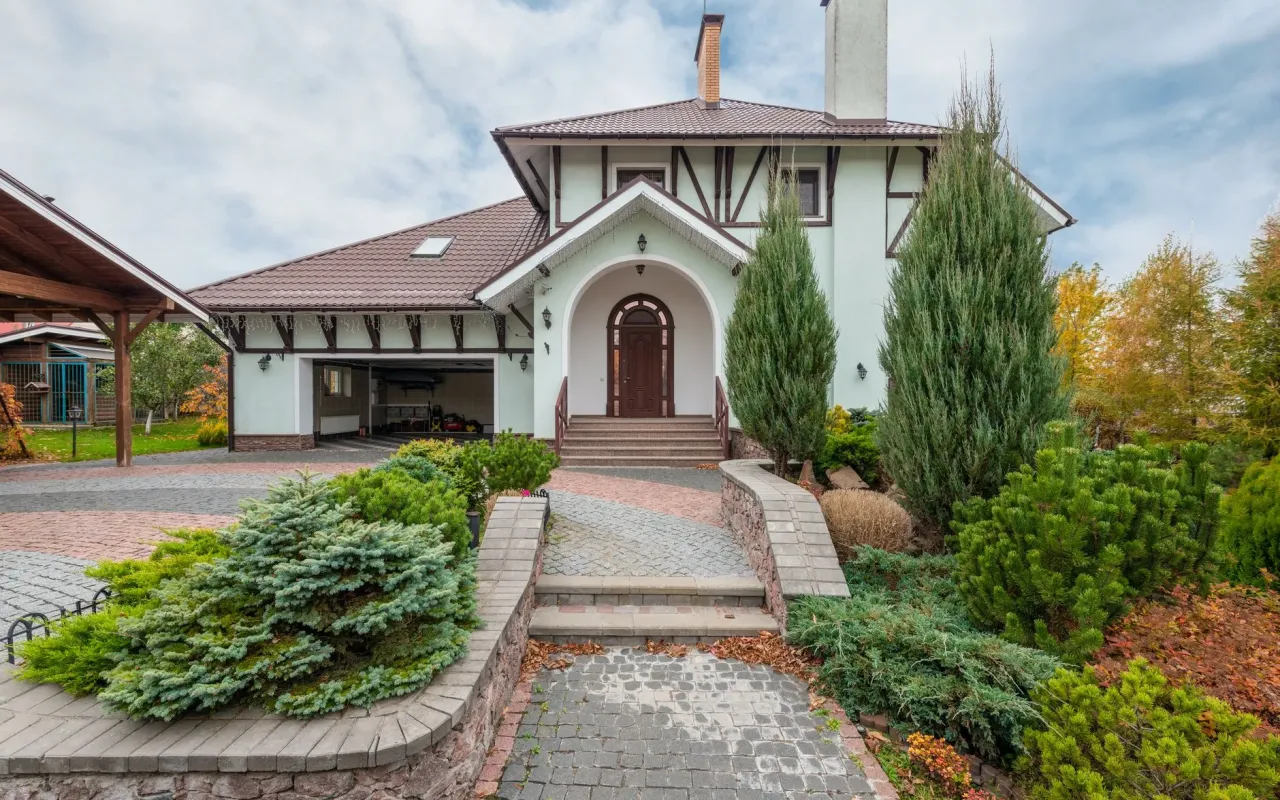
What a Low-Maintenance Front Yard Actually Looks Like
Let's put it together with a real example. Picture a 1,200-square-foot front yard in a suburban neighborhood. The original design was 900 square feet of lawn, a few overgrown boxwoods, and a flower bed full of annuals.
The redesign shrinks the lawn to a single 300-square-foot oval. The rest becomes a decomposed granite path to the front door, a gravel seating area, and mulched beds filled with native grasses, dwarf evergreens, and creeping thyme. A drip line on a timer waters the new plantings for the first year, then gets shut off.
Total installation cost: roughly $4,000 to $6,000, depending on materials and whether you DIY the planting. Annual maintenance after establishment: about two hours in spring for a quick trim and mulch top-off, plus a few minutes a month to check the drip timer. Compare that to the 70 hours and $1,500 the old yard demanded.
That's the real payoff. A low-maintenance front yard isn't about giving up on beauty — it's about designing a landscape that gets better with time while asking almost nothing from you. You get your weekends back, you save money, and your yard looks more intentional than it ever did when you were fighting it every Saturday.
Start small if a full redesign feels overwhelming. Kill one section of lawn this fall, plant it with natives next spring, and see how it feels. Most people never go back to grass once they realize how much of their life it was quietly consuming.