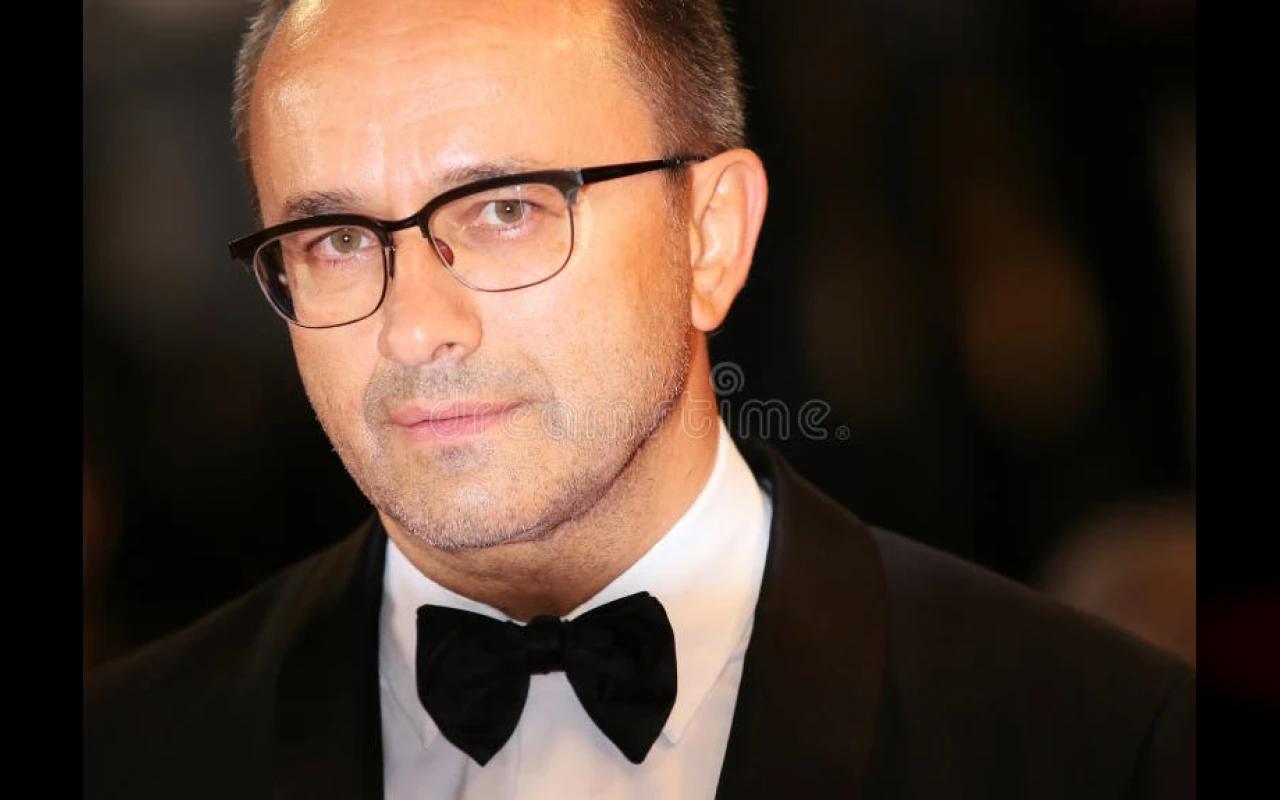
Explore Andrey Zvyagintsev's acclaimed 2010s trilogy—Elena, Leviathan, and Loveless—and how a near-fatal Covid battle disrupted his career.
- May 17, 2026
AceShowbiz - Andrey Zvyagintsev established himself as one of the leading filmmakers of his generation during the 2010s. While his 2003 debut The Return earned him early recognition, it was the trilogy of Elena (2011), Leviathan (2014), and Loveless (2017) that solidified his reputation. These films, all celebrated at the Cannes Film Festival, showcased his ability to craft intimate yet epic narratives. Notably, Leviathan and Loveless also received nominations for the Academy Award for Best International Feature. Throughout these works, he offered uncompromising and brutally realistic portrayals of modern Russian society.
However, after this prolific period, Zvyagintsev's career momentum was disrupted. Multiple projects failed to advance, but the most significant challenge was his battle with Covid-19 during the pandemic. The illness nearly claimed his life and led to severe lung damage, confining him to immobility for an entire year. The ordeal spanned 18 months, including 40 days in an induced coma, which he describes as akin to death. Against all odds, he made what he calls a “complete and utter miracle” recovery while in Paris, a city where he found refuge amid a dramatically changed world marked by Russia’s escalating conflict with Ukraine.
Despite these hardships, Zvyagintsev remained committed to depicting Russian life candidly and was inspired to create a new film titled Minotaur. This project is a reinterpretation of Claude Chabrol’s 1969 erotic thriller The Unfaithful Wife, co-written with Simon Lyashenko. Interestingly, Zvyagintsev had sought the rights to adapt this French-Italian classic long before the war began, but the current political climate gave the project a renewed urgency and deeper resonance.
In his first interview after the Cannes Film Festival, conducted through a Russian-language interpreter, Zvyagintsev reflected on his extraordinary journey back to filmmaking.
When asked about the nine-year gap since Loveless and the impact of his illness, Zvyagintsev shared that he had been attempting to produce a film titled The Opposite of Jupiter between 2018 and 2021. Budgetary challenges stalled that project, but the majority of those years were consumed by his debilitating illness. He recounted, “For 12 months, I could not get up. It was all to do with Covid. I was bedridden and couldn’t move my hands or legs. This was a horrific illness. You can consider my survival a complete and utter miracle.” He described the coma experience as an absence of existence and emphasized the slow, painstaking rehabilitation that followed. By August 2022, he had moved from Germany to Paris in a wheelchair and gradually regained his mobility and self.
Regarding the artistic impact of such a traumatic illness, Zvyagintsev admitted it was difficult to analyze whether the experience enriched or diminished him creatively. He expressed gratitude for his recovery and a sense of urgency about his work, explaining that the ordeal taught him not to delay important decisions or projects. “One has to live in a fast lane,” he said, vowing to push forward without waiting for hesitant producers.
The new film Minotaur is a loose adaptation of The Unfaithful Wife, set in 2022 Russia. The rights acquisition had initially failed in 2018, but Zvyagintsev believes it was fortunate, as the remake’s timing after the war began gave the story new meaning and momentum.
The ongoing Russia-Ukraine conflict profoundly influenced Zvyagintsev’s adaptation. The director emphasized his refusal to produce sanitized or fantastical depictions of the war, insisting on confronting the harsh realities visible just outside the window. He called this commitment indispensable for authentic storytelling.
In sum, Andrey Zvyagintsev’s remarkable survival and return with Minotaur at Cannes stands as a testament to resilience and artistic dedication. His experience with severe long Covid has not only reshaped his personal outlook but also infused his latest work with a timely urgency and unflinching honesty about Russia’s current turmoil.