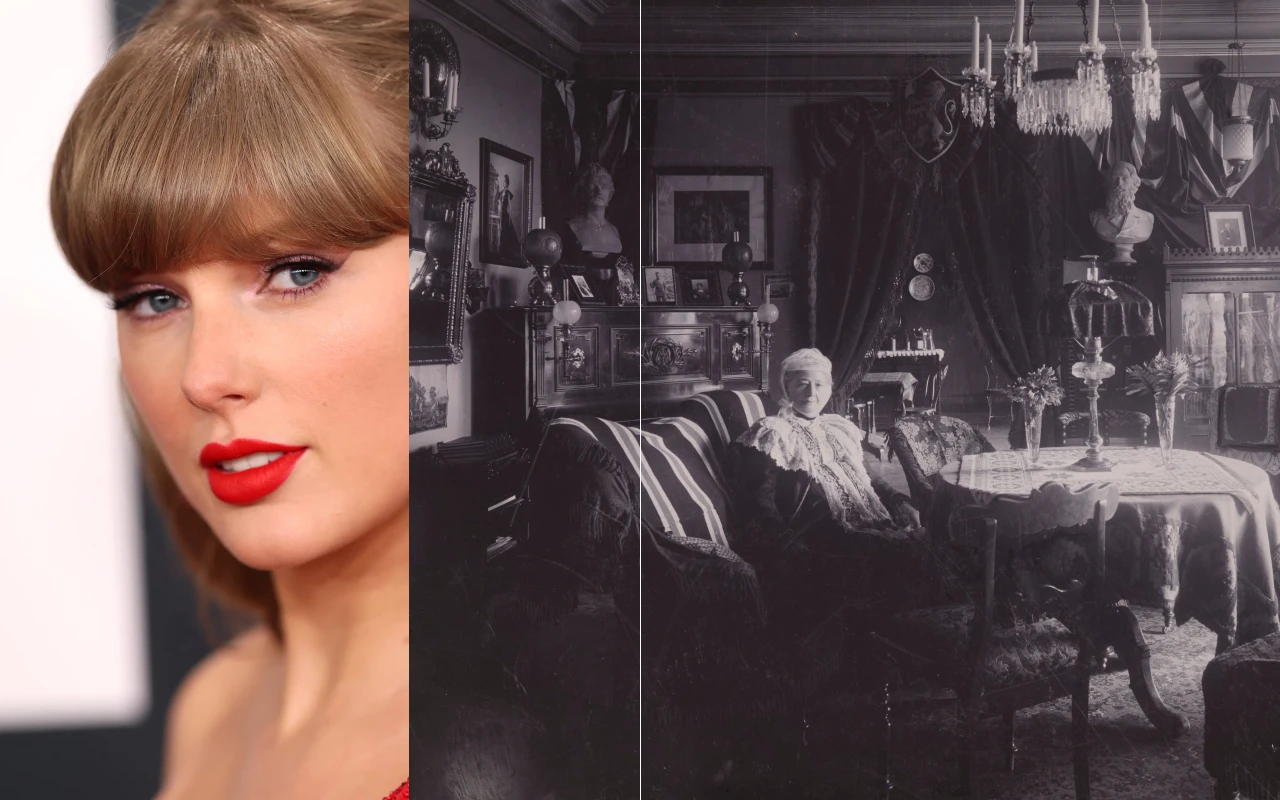
Taylor Swift fights trademark lawsuit from Vegas showgirl over her 2025 album title. Legal battle heats up.
- May 9, 2026
AceShowbiz - Taylor Swift’s legal representatives have strongly rebutted accusations that her 2025 album The Life of a Showgirl infringed on a former Las Vegas showgirl’s established brand.
In March, Maren Flagg, who performs under the name Maren Wade, initiated a lawsuit against Taylor Swift in a California District Court. Flagg claims that the title of Swift’s album conflicts with her trademarked brand Confessions of a Showgirl, registered in 2015. Flagg uses this brand to promote her podcasts, live performances, and books. According to Variety, Flagg’s complaint emphasizes that the two titles share “the same structure, the same dominant phrase, and the same overall commercial impression.”
Flagg argues that both brands operate in overlapping markets targeting the same audience, urging the court to halt Swift from marketing her album, live shows, merchandise, and related products until the dispute is resolved.
“Each additional sale compounds the confusion in the marketplace and further erodes [Flagg’s] ability to be recognized as the [sole] source of her ‘Confessions of a Showgirl’ brand,” she asserted in the lawsuit.
Responding this week, Taylor Swift’s attorneys labeled the infringement claims as “absurd” and denied any potential for brand confusion. They described the lawsuit and related motions as an opportunistic attempt by Flagg to leverage Swift’s fame to enhance her own brand.
Taylor Swift’s legal team stated, “Plaintiff attempts to broadly lump her cabaret show and defendants’ musical album together as ‘entertainment services.’ That comparison is absurd.”
The lawyers further highlighted the stark differences between Swift’s massive Eras Tour stadium concerts and Flagg’s performances, which take place in much smaller venues. They cited that Flagg’s shows have primarily been held at intimate locations, including a “90 seat cabaret-style venue” and an “RV & Golf Resort.”
In their court documents, Swift’s lawyers underscored that Flagg’s website currently lists no upcoming performances, questioning the timing of the lawsuit, which was filed eight months after Swift announced her album.
They also pointed out that since the album announcement, Flagg has attempted to associate her brand with Taylor Swift’s project by flooding her social media accounts with posts referencing the album. According to the legal filing, Flagg had not used the phrase “the life of a showgirl” in her promotions prior to August 2025. Afterward, she posted over 40 times on Instagram and TikTok about Swift’s album and related content.
According to Taylor Swift’s legal team, this behavior suggests Flagg is capitalizing on the singer’s fame to promote her own cabaret show. They noted that just four days after Swift announced the album title and artwork, Flagg launched a new podcast that mimics Swift’s album artwork, logo, title, and taglines. Flagg’s social media channels reportedly contained more than 40 advertisements using Swift’s music and trademarks without permission.
To counter these claims, Swift’s lawyers filed a proposed protective order on May 6, aiming for judicial support to dismiss Flagg’s request for preliminary relief. This order, obtained by Us Weekly, argues that Flagg failed to prove she is likely to succeed on the merits of her claims or that she would suffer irreparable harm without an injunction.
The proposed order states that Flagg has not demonstrated that the balance of equities favors her or that an injunction would serve the public interest. The filing further asserts that Flagg’s repeated attempts to link her brand with Swift and the album disqualify her from obtaining the preliminary relief she seeks.
Swift’s attorneys also base their defense partially on First Amendment protections. They argue that The Life of a Showgirl album and its promotional materials are expressive works protected by free speech laws unless found to be artistically irrelevant or misleading regarding the source of the content.
The legal team maintains that Flagg’s cabaret performances are distinct from the venues where Swift markets and performs her music, emphasizing the disparity between the two scales of entertainment.
Regarding Flagg’s claim of irreparable harm, Swift’s representatives contend that any damages can be remedied through monetary compensation, meaning the harm is not irreparable. Their petition states, “Flagg has failed to demonstrate a likelihood of confusion or irreparable harm.” They also argue that granting an injunction would cause significant financial damage to Swift, her team, and third parties, especially considering Flagg waited eight months after the album announcement to take legal action.