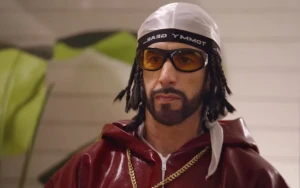
Salt-N-Pepa fight UMG for their masters. MAC supports their legal battle over copyright termination rights.
- April 9, 2026
AceShowbiz - Salt-N-Pepa are receiving significant support from Irving Azoff's Music Artists Coalition (MAC) amid their ongoing legal battle with Universal Music Group (UMG) concerning ownership of their master recordings.
On Tuesday, April 7, MAC filed an amicus brief with the Second Circuit Court of Appeals. This court is currently reviewing a previous ruling that dismissed a lawsuit brought by Cheryl "Salt" James and Sandra "Pepa" Denton against UMG, the largest music corporation worldwide. The lawsuit centers on UMG’s refusal to return the duo’s master recordings after Salt-N-Pepa exercised their “termination right,” a provision in copyright law that allows creators to reclaim ownership of their works decades after originally assigning rights.
The dispute originated from contracts signed in 1986 with Next Plateau Records, a label now under UMG’s control. However, a New York federal judge ruled in January that Salt-N-Pepa lacked termination rights because they were not direct parties to these contracts. Instead, the agreements were executed by their producer, Hurby "Luv Bug" Azor, and did not explicitly grant Salt-N-Pepa ownership of their songs.
Music Artists Coalition, which was founded by Irving Azoff in 2019 alongside prominent artists such as Don Henley, Dave Matthews, and Anderson .Paak, criticized the lower court’s decision in their brief. They warned it sets a dangerous precedent enabling record labels and publishers to sidestep termination rights by simply transferring copyrights to new entities, thereby excluding the original creators from ownership claims.
"This ill-conceived rule makes it trivially easy for publishers or distributors to evade termination: By transferring rights to a new entity and ensuring an author is neither a party to nor an executor of the new grant, publishers and distributors can entirely insulate themselves from an author's enforcement of statutory termination rights," the brief states. It further argues that such a ruling would undermine decades of negotiations and the protections established by the 1976 Copyright Act, effectively nullifying the compromises made between authors and distributors.
Joining MAC in this legal advocacy are the Authors Alliance and Public Knowledge, who emphasize that copyright termination was expressly created by Congress to protect creators, especially those who initially had limited leverage and received inadequate compensation. The brief references examples such as Bob Dylan, who received only a $100 advance on his first publishing deal in 1962, and Bruce Springsteen, who transferred his entire catalog to a manager for a mere 3% royalty share in 1972.
On the same day, the National Society of Entertainment & Arts Lawyers (NSEAL) submitted a separate amicus brief supporting Salt-N-Pepa. Written by a New Orleans-based music attorney who recently secured a landmark appellate ruling on the global applicability of copyright termination, the brief challenges the lower court’s implicit assumption that the duo’s 1986 recordings were “works made for hire.”
Under copyright law, works classified as “made for hire” are exempt from termination rights. While the district court did not explicitly address this exception in its ruling, NSEAL argues that the court’s conclusion—that there was no copyright transfer by Denton and James—amounts to an unsubstantiated determination that the recordings were works for hire. The brief contends this was a reversible error due to the lack of factual development and legal reasoning, urging the appellate court to remand the case for further examination.
Salt-N-Pepa’s attorney, Richard Busch, praised the involvement of these influential industry groups, stating, "That these amazing groups of the top people in the industry filed these amicus briefs speaks volumes not only to the strength of this appeal but to its importance to all artists in the music industry."
UMG has not publicly commented on the amicus briefs as of April 8. The music giant is expected to file its own appellate brief next month as the case progresses.
This appeal highlights pivotal issues regarding artists' rights and the enforcement of copyright termination under U.S. law. The outcome could have far-reaching implications for creators seeking to regain control over their intellectual property decades after initial contracts were signed.