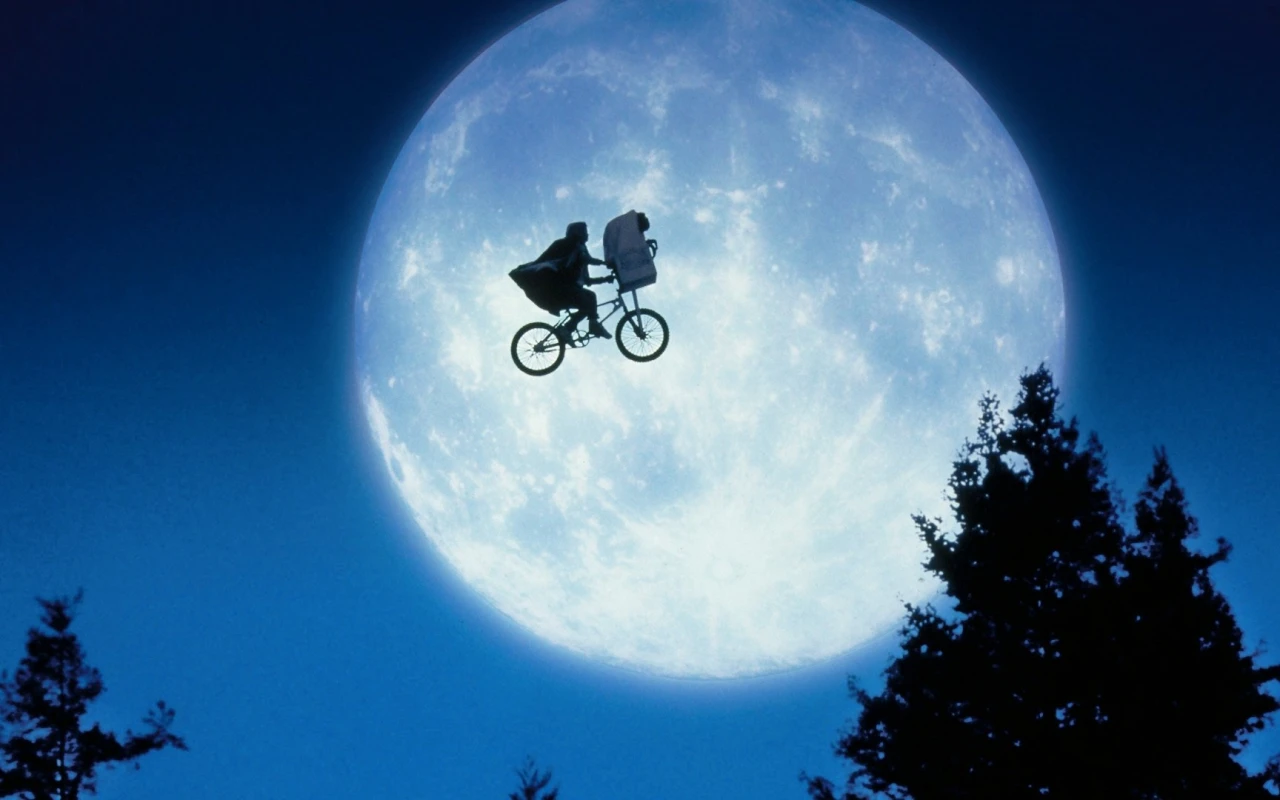
Discover how a young Henry Thomas' raw, emotional audition for E.T. won him the role and moved Steven Spielberg. The untold story behind the iconic film.
- April 8, 2026
AceShowbiz - E.T. the Extra-Terrestrial remains one of the most cherished alien movies ever made, a film that not only captivated audiences but also surpassed box office giants like Star Wars. However, before the movie became a cultural phenomenon, its young star, Henry Thomas, was convinced he had lost the role of Elliott after his initial audition.
On The Hollywood Reporter’s It Happened in Hollywood podcast, Thomas shared how he felt he “blew it the minute I opened my mouth.” The audition process took a surprising turn when director Steven Spielberg abandoned the scripted lines and offered the 10-year-old a different challenge: to imagine his best friend being taken away. This approach led Thomas to draw upon a deeply personal and traumatic memory—the death of his dog, killed by a neighbor’s dog during his childhood.
Connecting to this raw emotion, Thomas delivered a performance so authentic that it moved Spielberg to tears. Without hesitation, the director cast him as Elliott, the young suburban boy at the heart of the story. This moment is now legendary in Hollywood casting lore, marking the start of a defining role for Thomas.
Despite the film’s eventual massive success, nearly no one expected E.T. the Extra-Terrestrial to become a blockbuster hit. At the time, the prevailing belief—shaped by movies like Alien—was that audiences preferred frightening aliens over gentle ones. Thomas recalled that the studio viewed the project as a “little movie” and assumed the meaner alien in John Carpenter’s The Thing would outperform E.T. when both films premiered in the summer of 1982.
While The Thing initially flopped, E.T. went on to gross $793 million—equivalent to $2.5 billion today—toppling Star Wars as the highest-grossing film of its time with $775 million in ticket sales. The film’s universal appeal came from its heartfelt themes of loneliness, childhood, and loss, all anchored by a performance from a boy who initially thought the story was unexciting because it lacked “lightsabers” and “space battles.”
Spielberg took extraordinary measures during filming to preserve the film’s illusion, shooting scenes largely in sequence and keeping technical details hidden from the young cast. The goal was to help actors, especially children, treat E.T. as a real character. For co-star Drew Barrymore, who portrayed Elliott’s sister, this approach worked so well that she would wrap the animatronic alien in a scarf to keep it “warm.”
For Thomas, however, maintaining the illusion of E.T. proved more difficult. He was aware of the creature’s mechanical aspects—whirring servos, inflatable bladders, and multiple versions of the alien puppet—which sometimes broke the magic. His breakthrough came through a human connection with Caprice Roth, a mime who performed E.T.’s hand movements. In the film’s emotional farewell scene, Thomas wasn’t acting opposite a puppet but was actually saying goodbye to Roth, creating a genuine moment that translated to the screen.
This human connection is central to why E.T. remains so enduring and touching. The film did not shy away from difficult themes, including death. The iconic “death” scene, where E.T. pales and becomes lifeless while Elliott grieves, was one of the first times many viewers encountered grief in a family movie. Yet, the scene also offered hope and renewal, culminating in E.T.’s revival as flowers bloom and his heart glows—an emotional journey crafted masterfully by Spielberg.
Despite the film’s success and the deep emotional experience on set, Thomas struggled with the sudden fame that followed. He confessed, “I wasn’t ready for the fame” and hadn’t anticipated becoming famous. Initially, talent agencies ignored his calls because he lived in Texas, but after E.T. topped the box office, his phone “started ringing” nonstop.
Choosing to remain in Texas, Thomas avoided the pressures that overwhelmed some of his co-stars. His career path was unconventional, moving in and out of acting according to his own terms. He acknowledged the cyclical nature of show business, with times of success and times of struggle.
More than 40 years after its release, E.T. hasn’t lost its emotional resonance. The initial merchandising efforts were modest, described by Thomas as “little stuff they could produce quickly,” but the film’s emotional impact has become permanent. Unlike many blockbusters, E.T. feels intimate and personal—a story about more than just a boy and an alien; it’s about absence, longing, and the fragile magic of connection.
Thomas encapsulated the film’s lasting power with the perspective of someone who has lived both its illusion and aftermath: “We all get born and we all die. You don’t get a rule book. Somewhere in between, if you’re lucky, you make something that lasts forever.”
Conversation highlights:
Did working with Steven Spielberg hint at the movie’s potential success?
It was a major opportunity to work with Spielberg, known for hits like Jaws, Raiders of the Lost Ark, and Close Encounters of the Third Kind. However, Thomas recalled that E.T. felt like a smaller, more personal project. The studio gave Spielberg $10 million and told him to “go off and do this little movie with your friends.” At the time, the idea of an alien movie conjured images of scary creatures like those in Alien. The assumption was that a mean alien would be more popular than a gentle one, so no one knew how audiences would respond to E.T.’s tenderness.
What really happened during the audition?
Thomas described how the widely viewed audition tape only shows the second part. Initially, he read scripted sides and felt he had failed, looking down because he thought he had lost the role. Then, under Spielberg and casting directors’ guidance, he improvised imagining a friend being taken away by the government. The only personal experience he could connect to was losing his dog, which was traumatic. This emotional honesty earned him the role, much to his surprise.
Did you understand the story when you auditioned?
No, Thomas didn’t know much about the plot until weeks before filming. The production kept details secret. When he finally read the script, he was a little disappointed, expecting more excitement like “lightsabers” and “space battles,” which his 10-year-old mind craved. Instead, it was a quiet, emotional story.
How did Spielberg maintain the illusion of E.T. on set?
Spielberg made a conscious effort to help the young actors believe in E.T. by filming in sequence and hiding technical aspects. Drew Barrymore, young enough to truly believe, treated the animatronic with care, wrapping it in a scarf. For Thomas, it was more challenging due to the mechanical noises and multiple puppet versions. The real breakthrough was the connection with mime Caprice Roth, who performed E.T.’s hands, making the goodbye scene authentic.
Through these experiences, Henry Thomas became part of a film that continues to resonate with audiences worldwide, demonstrating the power of genuine emotion and human connection in cinema.