A shocking secret revealed. Zendaya and Robert Pattinson star in a controversial film about a past plan for a school shooting.
- April 4, 2026
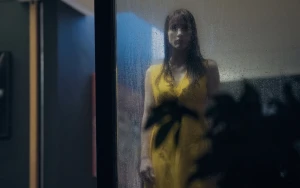
AceShowbiz - The Drama arrived amid intense online speculation long before its theatrical release, fueled by the incendiary plot twist teased in its trailer. The film, starring Robert Pattinson and Zendaya as an engaged couple, centers on a shocking secret Emma (Zendaya) reveals to her fiancé Charlie (Pattinson) and their close circle of friends. Online forums and subreddits buzzed with theories about the nature of Emma’s confession — “the worst thing you’ve ever done” — with fans piecing together hints from casting notices, leaked script elements, and on-set photos.
When early previews and premieres finally exposed the truth, the internet’s worst fears were confirmed: Emma had once planned a school shooting but ultimately never went through with it. The plot point ignited controversy, prompting gun-control advocate Tom Mauser—whose son was a victim of the 1999 Columbine massacre—to denounce the film’s premise publicly via TMZ, despite not having seen the movie. Distributor A24 found itself at the center of a brewing scandal, an occupational hazard when partnering with directors aiming to provoke discourse in the vein of filmmakers like Emerald Fennell or Lars von Trier. For Kristoffer Borgli, the writer and director behind The Drama, sparking conversation is clearly a key creative goal.
Borgli, a Norwegian filmmaker in his forties, made his feature debut in 2017 with Drib, a work blurring the lines between fiction and documentary. That film starred comedian Amir Asgharnejad playing himself, chronicling his rise to notoriety after viral videos of street fights attracted attention from an energy drink campaign. His 2022 follow-up, the satirical Sick of Myself, explored dark themes of attention-seeking through the story of Signe (Kristine Kujath Thorp), a young woman who deliberately harms her own skin to gain sympathy and notoriety. This film earned him recognition at Cannes and caught the attention of producer Ari Aster, who backed Borgli’s first American feature, Dream Scenario, released by A24 in 2023. That surreal comedy features Nicolas Cage as Paul Matthews, an academic who inexplicably appears in the dreams of strangers, grappling with newfound unwanted fame.
While Borgli excels at devising provocative premises, his ability to sustain them through a film’s narrative arc is less assured. Dream Scenario begins with a hilarious, bizarre sequence of Paul haunting dreams like an awkward chaperone at a school dance, but ultimately devolves into a muddled allegory critiquing fleeting celebrity and social media outrage. Similarly, if Borgli pushed the envelope too far with The Drama, it is less due to the unsettling revelation itself and more because the story loses direction once that secret is unveiled.
About a quarter of the way through the film, Emma confesses to Charlie, his best friend Mike (Mamoudou Athie), and Mike’s wife Rachel (Alana Haim)—who is also Emma’s maid of honor—during a last-minute catering tasting that feels implausibly timed. She admits she didn’t carry out the shooting but came dangerously close as a lonely, awkward 15-year-old military brat struggling to adjust to a new school in Louisiana. Emma was isolated and drawn to the aesthetics of past school shooters, posing with her father’s rifle, attempting to record manifesto-like videos while wearing heavy makeup, and eventually bringing the weapon to school. Her plan is thwarted when a real mass shooting occurs nearby at a mall, tragically killing a classmate, effectively stealing her “thunder.”
Ironically, Borgli has employed a similar narrative device before more effectively. In Sick of Myself, Signe pressures a journalist to write about the mysterious skin condition she’s fabricated. Yet just as the feature goes live, breaking news of a family annihilation pushes her story off the homepage. Frustrated, Signe bitterly remarks, “What fucking nerd shoots his whole family? It’s just really bad timing.”
What makes The Drama feel underdeveloped is not its willingness to portray a protagonist who once contemplated America’s most horrifying crime, but its failure to deeply explore her motivations and the emotional fallout of those memories. Emma’s confession becomes a mere MacGuffin — a plot device to challenge Charlie’s love and acceptance in a story that claims to be about embracing the unknowable parts of those we care for. Borgli seems poised to mature his storytelling, offering more empathy toward his characters rather than relentless, clinical dissection, yet the film instead feels like a retreat, lacking the bravery to fully engage with its dark themes.
Borgli’s fascination with attention and its exploitation by individuals and institutions is evident across his body of work. This obsession shapes the narrative engines of his films. The Drama can be seen as a slicker but less daring counterpart to Sick of Myself. The latter featured unapologetically flawed characters who commit morally repugnant acts to secure the spotlight, terrified of being exposed as monsters more than of legal or mortal consequences. Conversely, The Drama demands its characters be likable despite Emma’s youthful flirtation with mass murder, heavily framing the story through Charlie’s perspective.
With Emma’s darkest secret now public, her role is reduced to anxious worry and hoping for Charlie’s acceptance. The film channels its outrage through Rachel, whose condemnation is immediate and forceful. Meanwhile, Charlie, a museum curator who relocated to Boston from the U.K., struggles to comprehend Emma’s revelation, treating it as something almost alien. He spends much of the movie trapped in discomfort, vacillating over whether to commit to or reject his fiancée.
This narrative choice introduces an uncomfortable coyness that borders on offensiveness—not because the film trivializes mass shootings, but because it reduces such a grave issue to a mere plot device. Borgli’s penchant for satirizing bourgeois hypocrisy and shallow corporate diversity campaigns is clear. For instance, in Sick of Myself, Signe, despite her grotesque self-inflicted injuries, lands a job in an inclusive clothing campaign alongside a model with symbrachydactyly, highlighting the cynical commodification of suffering and difference.
The strongest moments in The Drama lie beyond the central controversy—in the nuanced performances of its leads and the detailed portrayal of their upscale, semi-intellectual environment. From the soft glow of Akari lamps filling their airy duplex to a charming coffee-shop encounter where Charlie lies about his fondness for a book Emma is reading, the film captures authentic, intimate moments. However, it’s clear Borgli, a scholar of abjection and unsettling fantasies, understands well what drives a marginalized, immature teenager toward radicalization. The film’s real failing is in pretending otherwise, glossing over the complex psychology behind such a transformation.
Ultimately, The Drama is less an incisive examination of trauma and redemption and more a provocative setup without satisfying resolution. Borgli’s eagerness to ignite discussion is palpable, but his reluctance to fully grapple with the implications of Emma’s secret leaves the film feeling unfinished and evasive. Instead of a bold confrontation with painful realities, it opts for a safer, less challenging narrative that centers Charlie’s discomfort over Emma’s haunted past. This choice dilutes the potential impact of the story, making The Drama a film that provokes debate but struggles to deliver meaningful insight.