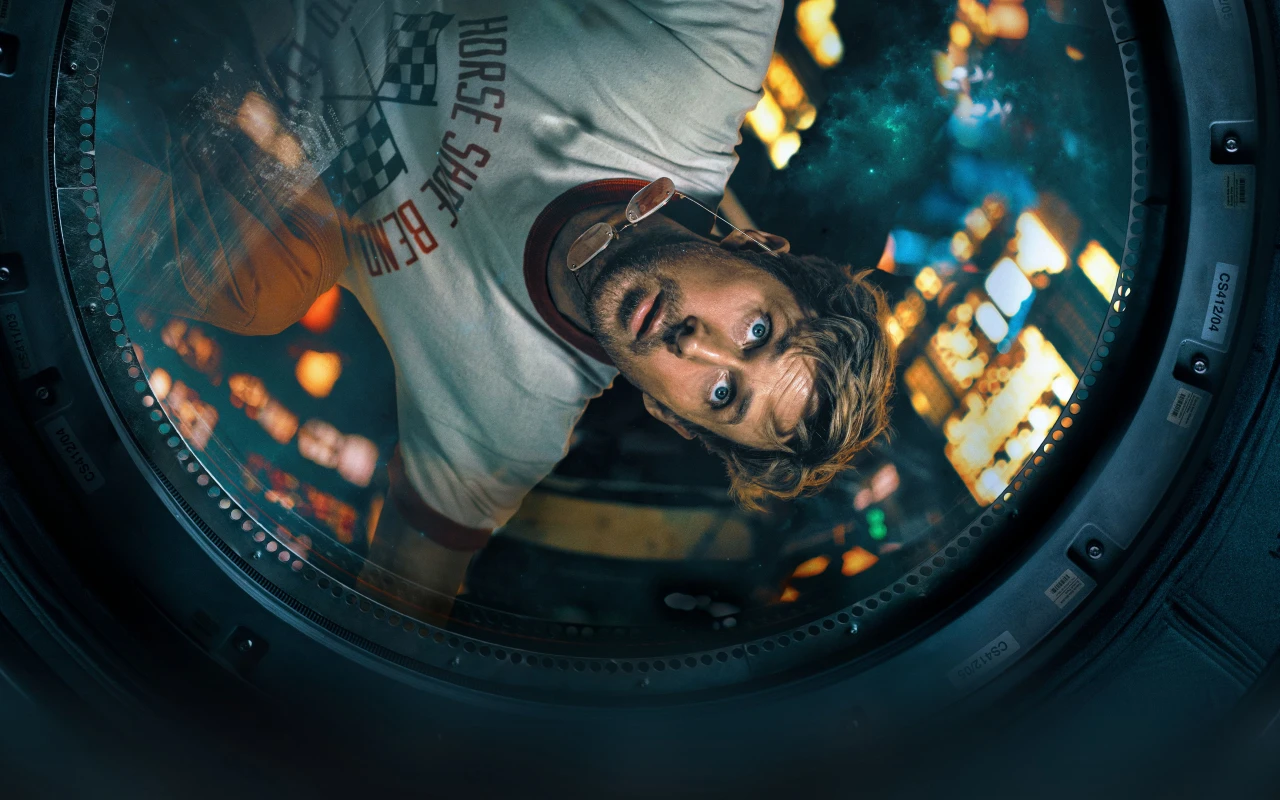
Discover how puppetry brought Rocky to life in Project Hail Mary, defying CGI with tangible artistry and authentic on-screen chemistry.
- April 4, 2026
AceShowbiz - Project Hail Mary showcases an extraordinary blend of puppetry and performance with the creation of Rocky, the alien companion to Ryan Gosling’s character Ryland Grace. This unique creature was brought to life through the artistry of Drama Desk Award-winning puppet designer James Ortiz and his dedicated team of five puppeteers. Their work transformed steel rods, fiberglass, and animatronics into a fully realized character that could not be replicated by CGI alone.
In an era dominated by digital effects, the choice to use puppetry on a blockbuster scale feels both nostalgic and revolutionary. Rocky’s design is arachnid-like with a rocky exterior, providing a tangible presence alongside Gosling’s molecular biologist. This duo carries the narrative, which centers on their joint mission to save their home worlds. The physicality and spontaneity of live puppeteering allowed for improvisation not just in movement but in dialogue, creating a dynamic, authentic interaction throughout the filming process.
James Ortiz explains how actor Ryan Gosling treated him as a creative partner rather than just crew, a rare and rewarding experience for a puppeteer. “Ryan treated me like a collaborator and actor on set,” Ortiz says, emphasizing the respect and equality he felt during production, a sentiment not always common even in theater puppetry.
Ortiz’s background includes notable Broadway and Off-Broadway work, such as the skeletal Milky White in Into The Woods, the brontosaurus in The Skin of Our Teeth, and the humanized tin man in The Woodsman. Although Project Hail Mary is his first film, he quickly expanded his role from puppeteer to also voicing Rocky, thanks to directors Phil Lord and Chris Miller. The role required not only complex physical manipulation but also subtle breath control inspired by Katharine Hepburn to give Rocky a distinctive voice and personality.
Ortiz describes the mental challenge of managing both precise puppetry and improvisational acting simultaneously. “My brain was split every day of shooting,” he admits, balancing the exactness of bunraku puppetry—a traditional Japanese style involving multiple puppeteers—with lively, off-the-cuff exchanges with Gosling.
The film’s directors encouraged a creative atmosphere on set, favoring long takes filled with improvisation and playful detours before later refining the scenes in editing. Ortiz recalls 45-minute takes where lines and actions would meander, exploring character relationships and misunderstandings. The fluidity of these sessions often left him unsure about which exact scene or take they had just completed, complicating subsequent filming of close-ups and second unit work.
Regarding Rocky’s intricate movements, Ortiz reveals that the puppetry was a hands-on process. He controlled the central carapace, the main body shell of the puppet, while other puppeteers manipulated the legs using steel rods attached to the forearms. The puppet featured animatronic fingers activated by simple three-finger triggers at the rod ends, resembling squirt-gun pulls. These motors allowed Rocky to perform delicate actions like grabbing a tape measure or “jazz hands,” although the latter sometimes overheated the motors, requiring careful management of battery usage throughout the day.
Rocky’s breathing and eating motions were achieved through a dual carapace system. One shell contained small stones that moved subtly atop his head, adding a lifelike quality. When the weight of these stones interfered with movement, Ortiz suggested digital enhancement to maintain fluidity.
The teamwork between Ortiz and his fellow puppeteers was crucial to Rocky’s seamless performance. They spent eight weeks rehearsing before filming, developing a deep connection and trusting each other’s ideas. Ortiz describes their coordination as hive-mind-like, where even the smallest movement required consensus. For example, Rocky’s head could not tilt without the legs’ puppeteers making room, ensuring flawless choreography.
An early memorable scene involved Rocky tapping on glass to get Ryland’s attention. To coordinate their movements precisely, Ortiz sometimes asked to turn off his microphone to communicate silently with the team. Behind the scenes, he was improvising Rocky’s internal monologue and exchanging playful banter with his puppeteers, creating a rich layer of interaction unseen by the audience.
The physical and creative collaboration between Ortiz, his team, and the film’s cast and crew highlights the enduring power of practical effects in modern filmmaking. By merging traditional puppetry techniques with contemporary technology and performance, Project Hail Mary delivers a memorable alien character who feels both real and emotionally engaging, enriching the movie’s story of interstellar friendship and survival.