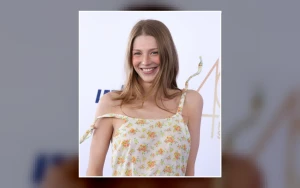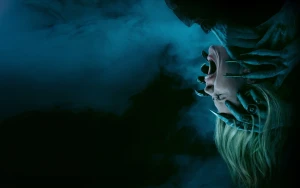
Explore Yebba's creative evolution from grief to Grammy gold in her powerful sophomore album, Jean. A journey of healing and artistry.
- March 19, 2026
AceShowbiz - The "Follow-Up" series explores the journey behind sophomore albums. Here, singer-songwriter Yebba shares the creative evolution that shaped her album Jean, released on March 6.
Yebba's 2021 debut Dawn emerged after years of healing. In 2016, while gaining recognition, Arkansas-born Abbey Smith lost her mother to suicide. That year, Yebba captivated audiences, from backing Chance the Rapper on Saturday Night Live’s performance of "Same Drugs" to featuring on A Tribe Called Quest's final album. Her emotive live rendition of "My Mind" further highlighted her talent, sparking comparisons to artists like Adele.
Despite the early acclaim, Yebba took two years to recover, returning with notable collaborations. She lent her soulful voice to Sam Smith's "No Peace" and Mark Ronson's "Don't Leave Me Lonely," and earned her first Grammy for a cover of the Bee Gees’ "How Deep Is Your Love?" with PJ Morton of Maroon 5. In 2021, she earned a place in Drake’s album with the interlude "Yebba's Heartbreak," an intense declaration of devotion.
While working on Dawn, Yebba teamed with producer Mark Ronson and enlisted musicians such as Questlove and Pino Palladino, inspired by D'Angelo's Voodoo. The album’s release in 2021 was met with critical praise, including a Grammy nomination for Best Engineered Album, Non-Classical in 2022. Artists like Hozier have praised her, naming her among their top vocalists, while vocal coaches and YouTubers analyze her performances closely.
For her second album, Jean, released in early 2024, Yebba adopted a different creative process. She reduced collaborators and refined the song list before recording, producing a more focused and intimate work. Named after her grandmother who passed three years ago, Jean was largely written after she moved from New York back to West Memphis, Arkansas, where she spent more time developing ideas. Recording took place at New York’s Electric Lady Studios with a small core team, including guitarist Charles Myers, keyboardist James Francies, and co-producer and engineer John Rooney.
The album showcases a rich blend of folk, soul, and psychedelic influences, touching on themes of love, longing, and loss. Vocally, Yebba explores both technical and free-form styles, from the spontaneous "Of Course" to the sultry lead single "Waterfall." The latter gained additional attention when Drake sampled it in his 2023 album For All the Dogs, signaling his support for her work. Yebba chose to release Jean quietly, without the usual promotional fanfare such as music videos or interviews, allowing the music to speak for itself.
Yebba reflects on her journey: “I generally feel frustrated with growing up. I’m 31 now; apparently, I’ve been an adult and haven’t realized it. I was upset having to do so many things on my own, having been catapulted into this world. I was 21 with so much opportunity, but my mom was mentally ill and killed herself, and I’ve focused on being as stable as I can. I thought my 20s would be the years where I would build a life, and there’s been nothing but destruction. Reconstruction hasn’t started yet.”
She contrasts this with the memory of her grandmother: “My grandmother was a tank, and she lived a long, healthy life. She didn’t pass in the tragic way my mom did or chose to. It left me with, in a way, a peace. I felt like it allowed me to go be curious about the world that’s out there and go live it.”
The move back to Arkansas was partly practical—to save money and allow time to write—but also a source of solitude and clarity. “I wrote more at home in Arkansas because I moved out of New York to save some money, and that was the cause of a lot of solitude. It wasn’t all a money thing, but I was trying to stretch my budget to give myself time to write all the things I wanted to. I knew I wasn’t going to tour for three years. I had a lot of sadness when I left, but I felt like clearer images would appear to me.”
She describes the creative distance New York imposed: “There was an added layer of anxiety that I had to have to operate in New York. There was a slight degree of separation from whatever original idea I would have, kind of a barrier between me and my own voice in some ways.” The song “West Memphis” explores ideas about authenticity and aestheticism, reflecting on her upbringing with a preacher father. “I was in the bathtub, and all the lyrics and melody kind of came to me.”
Musically, guitar remained central. “So many of the songs ended up being and staying guitar driven because that’s the only instrument that I write on. I’m not a very dynamic guitar player. I can do about one or two things. I sing a certain way when I’m playing guitar; I left it on ‘Alright’ because a little wonkiness felt right to keep.”
For Dawn, songs took shape over years, often written in moments of solitude in her father’s garage. “Most of the time I was here in Arkansas, to be honest, I was drinking and smoking in my dad’s garage. I wasn’t actively writing, but I’d come in occasionally and sit down with my guitar, and an idea would come out. That’s how I wrote.”
For Jean, she sought to develop ideas independently, away from external expectations. “I wanted to expand a bit and see how I would go about developing ideas on my own without people being like, ‘You need to find your sound.’”
Collaborations were more intimate. The track “Alright” was the first to stick, followed by “Earth, Wind, and California,” written quickly and demoed before working with Charles Myers in Nashville. “I don’t want to hear my chicken scratch on every fucking record,” she jokes, referring to her own guitar demos.
Working with Mark Ronson on her debut was professional and thoughtful, but for the new album, fewer collaborators meant a stronger connection to the original emotions. “I felt that the fewer people involved, the less separated I’d be from the original feeling of a lyric or the vocals.”
Longtime collaborator and engineer John Rooney, who recorded her Tiny Desk and live Electric Lady sessions, co-produced Jean. “No disrespect to the people that came together to help me with my first one, but fuck ... those live recordings. I just kind of kept working with Rooney. I asked him toward the beginning if he was willing to co-produce with me. Why don’t we do as much work as you want to do, and if you do the work, you get the credit? He is my favorite fucking person to work with. Him and keyboardist-composer James Francies are my two; Charles is my three.”
Electric Lady Studios holds a special place for Yebba. “I’ve ripped probably 50 or 70 packs of cigarettes in there, and they never kicked me out. It’s a home for me.”
Her thoughts on vocal performance emphasize authenticity over perfection. “I think American Idol ruined singing, turning the home audience into judges, and spoiling the spontaneity. It turns a run into a trick or an acrobatic move. I think sometimes when you do too much on the record, people show up to shows wanting to see you do the exact run. Do you want people to get up there and lip-sync? That’s how you get live performances that sound just like the record.”
“If you want me to do a one, two, and a pirouette, y’all hired…” she says, hinting at the pressure for performers to replicate studio perfection live.
With Jean, Yebba offers a deeply personal, sonically diverse album created with intentional simplicity and emotional honesty. It stands as a testament to survival, growth, and the power of music to heal.