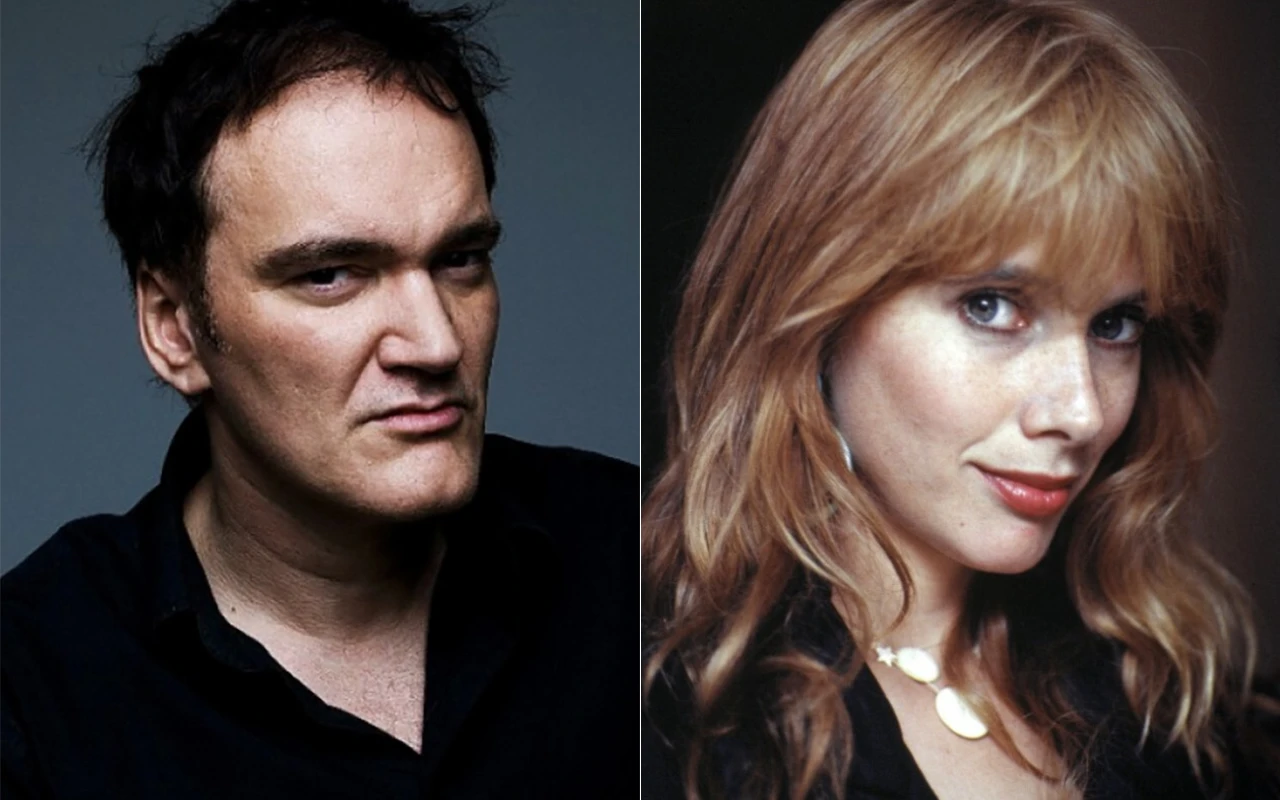
Tarantino defends his use of the N-word in films after Rosanna Arquette's criticism, calling her remarks a "lack of class" in a fiery response.
- March 12, 2026
AceShowbiz - Quentin Tarantino has addressed recent remarks made by Rosanna Arquette, who criticized his frequent use of the N-word in his films, including their collaboration on Pulp Fiction. The racial slur appears extensively in Tarantino’s works, with more than two dozen instances in Pulp Fiction and over 100 occurrences in Django Unchained.
Rosanna Arquette recently expressed disapproval of the director’s use of the slur, accusing him of being granted a “hall pass” to include it in his movies. In response, Quentin Tarantino penned a letter, shared by Deadline, calling her criticism a “decided lack of class” and “no less honor.” He suggested that the widespread media coverage of her comments might have been the real objective, implying the publicity came at his expense.
In his letter, Tarantino recalled Arquette being “thrilled” to join the cast of Pulp Fiction, a film that also featured notable actors such as John Travolta, Samuel L. Jackson, Uma Thurman, Bruce Willis, Harvey Keitel, Tim Roth, Amanda Plummer, and Christopher Walken. He specifically called out Arquette for accepting the role and the payment despite her apparent discomfort with the film’s language. While acknowledging that her current feelings may be genuine, Tarantino described the public criticism as “cynical” and suggested it was a breach of the “esprit de corps” expected among artistic collaborators.
The letter concluded with a pointed sarcastic congratulations:
“Dear Rosanna,
I hope the publicity you're getting from 132 different media outlets writing your name and printing your picture was worth disrespecting me and a film I remember quite clearly you were thrilled to be a part of?
Do you feel this way now?
Very possibly.
But after I gave you a job, and you took the money, to trash it for what I suspect is very cynical reasons, shows a decided lack of class, no less honor.
There is supposed to be an esprit de corps between artistic colleagues.
But it would appear the objective was accomplished.
Congratulations
Q”
The controversy began following a recent interview Arquette gave to The Times. While describing Pulp Fiction as an “iconic” and “great” film, she openly stated she was “over the use of the N-word – I hate it.” She further argued that the slur is “not art,” but simply “racist and creepy.”
Arquette is not alone in her criticism; other prominent figures such as Spike Lee and Lee Daniels have also voiced concerns over the recurring usage of the N-word in Tarantino’s films.
Pulp Fiction, released on September 10, 1994, is a crime drama centered on characters Vincent Vega, Jules Winnfield, and Butch Coolidge navigating the Los Angeles underworld. It achieved significant commercial success, grossing $213 million worldwide. Critically, it holds a Certified Fresh rating on Rotten Tomatoes with a 92% critic score and a 96% audience score.
During awards season, Pulp Fiction earned multiple Academy Award nominations, including Best Picture, Best Director, Best Actor for John Travolta, Best Supporting Actor for Samuel L. Jackson, Best Supporting Actress for Uma Thurman, and Best Film Editing. Quentin Tarantino and Roger Avary won the Oscar for Best Original Screenplay, an accolade Tarantino also received at the Golden Globes.
Aside from Pulp Fiction, Quentin Tarantino is known for directing other acclaimed films such as Reservoir Dogs, Jackie Brown, Kill Bill: Volume 1, Kill Bill: Volume 2, Death Proof, Inglourious Basterds, The Hateful Eight, and Once Upon a Time in Hollywood.
Rosanna Arquette has also had a notable film career with roles in movies like The Aviator, Desperately Seeking Susan, Crash, The Whole Nine Yards, After Hours, and The Executioner's Song. Her performance in Desperately Seeking Susan earned her a BAFTA award.
The public exchange highlights ongoing debates about language and representation in cinema, especially surrounding the use of racially charged terms in art. As these conversations continue, Quentin Tarantino and Rosanna Arquette remain central figures in the discussion about artistic freedom and social responsibility in filmmaking.